


Welcome to the Free edition of How They Make Money.
Over 300,000 subscribers turn to us for business and investment insights.
In case you missed it:
Jeff Bezos is buying into Liverpool FC.
Last month, the Amazon founder joined a consortium acquiring roughly a third of the English football club at a valuation north of $7 billion. Since then, record-setting sports deals have kept coming.
⚽ Liverpool FC: $7.0 billion — Bezos, Saverin, and Bhatia
🏈 Seattle Seahawks: $9.6 billion — Vinod Khosla and family
🏀 Los Angeles Lakers: $12.5 billion — Josh Kushner and Bob Iger
Just this week, Clearlake Capital also agreed to consolidate control of Chelsea FC in a deal valuing the club at roughly $6.8 billion.
These valuations look strange through a traditional investing lens. Liverpool generated £703 million in revenue last season and only £8 million in after-tax profit. European football clubs routinely reinvest most of what they earn into players, wages, and the pursuit of trophies.
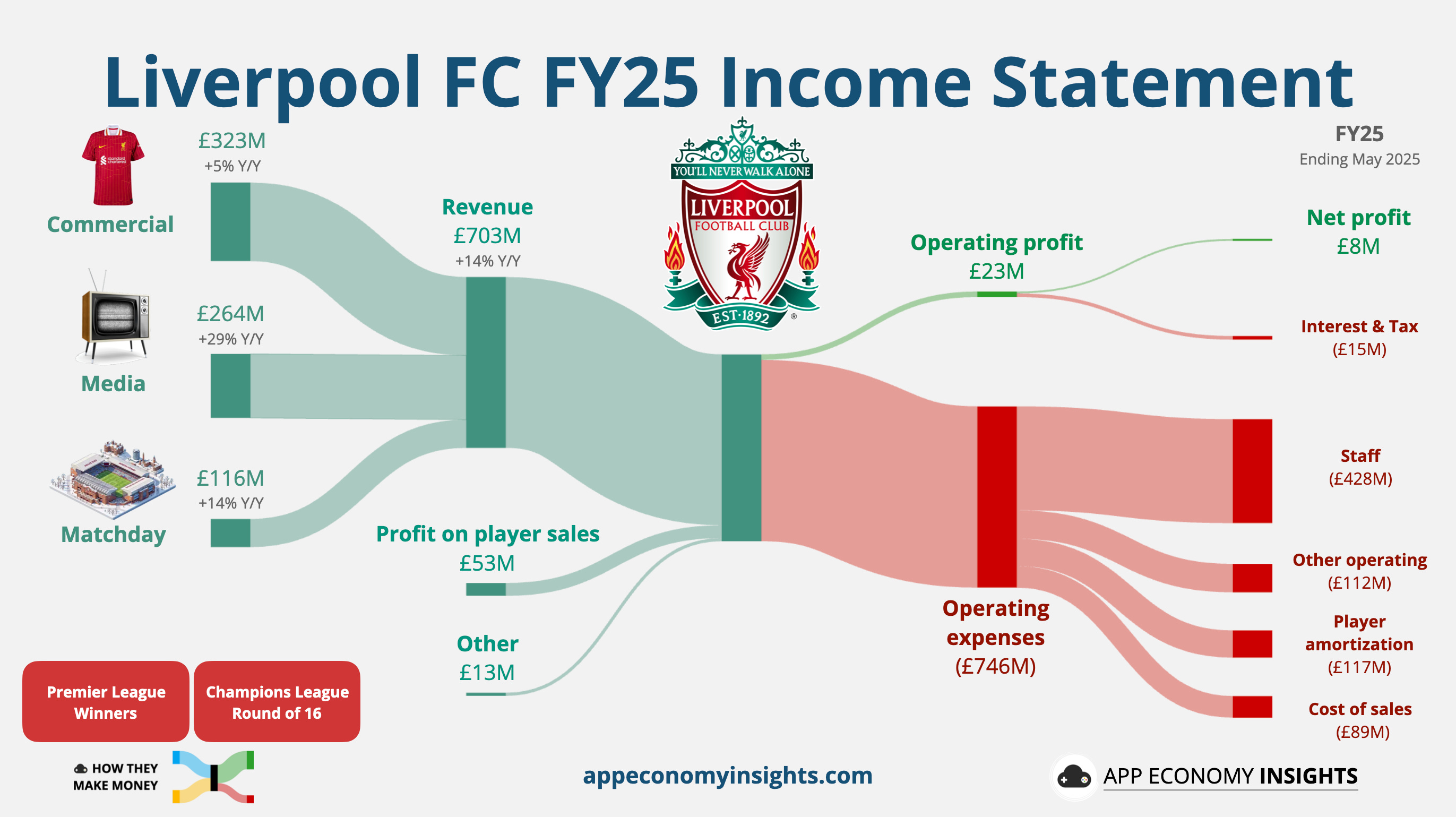
Last summer, we explored those peculiar dynamics in Football Economics, including why even the world’s biggest clubs often struggle to turn enormous fan bases into consistent profits.
Yet while profits remain elusive, the assets themselves keep rising in value. FSG bought Liverpool for just £300 million in 2010. Sixteen years later, investors are looking at a ~15x return.
Today, we’ll explore why sports teams have become such coveted assets, and what Bezos may really be buying with Liverpool.
Today at a glance:
📈 Teams keep getting more valuable
🏟️ Why these assets are different
🏈 Why the NFL and NBA are more profitable

1. 📈 Teams keep getting more valuable
Recent deals are extreme, but not isolated. Across major sports, teams have become some of the world’s most valuable private assets.
The NFL dominates the leaderboard. 15 of the world’s 20 most valuable sports teams are NFL franchises, with the Dallas Cowboys leading at $15.5 billion. The only outsiders are three NBA teams and two MLB teams.
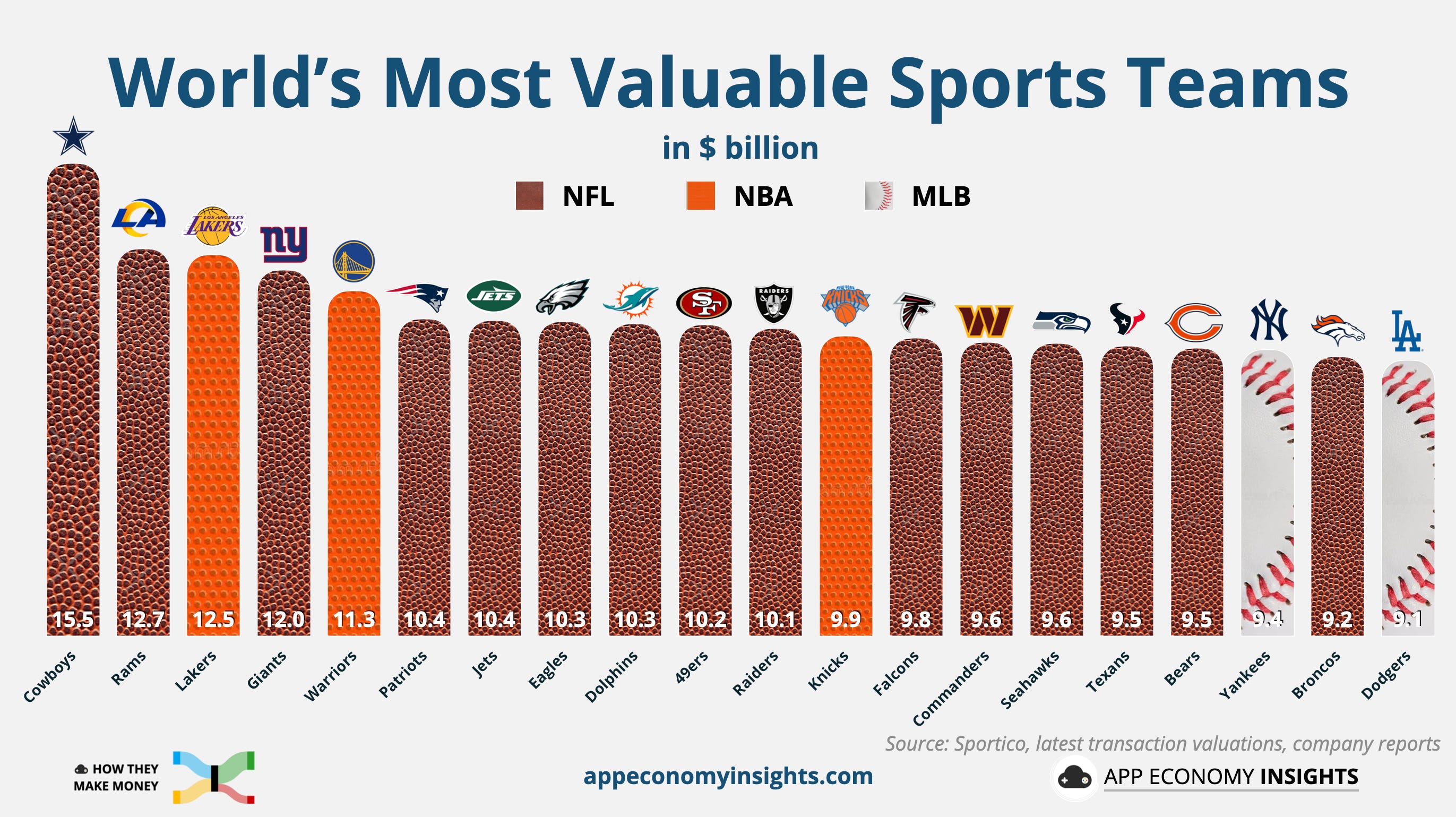
European football is notably absent.
Even Real Madrid, the world’s most valuable football club, is worth an estimated $7.7 billion according to Sportico, below every team shown above. Forbes pegs the club valuation at $9.5 billion, but either way, the contrast is striking for the world’s most popular sport.
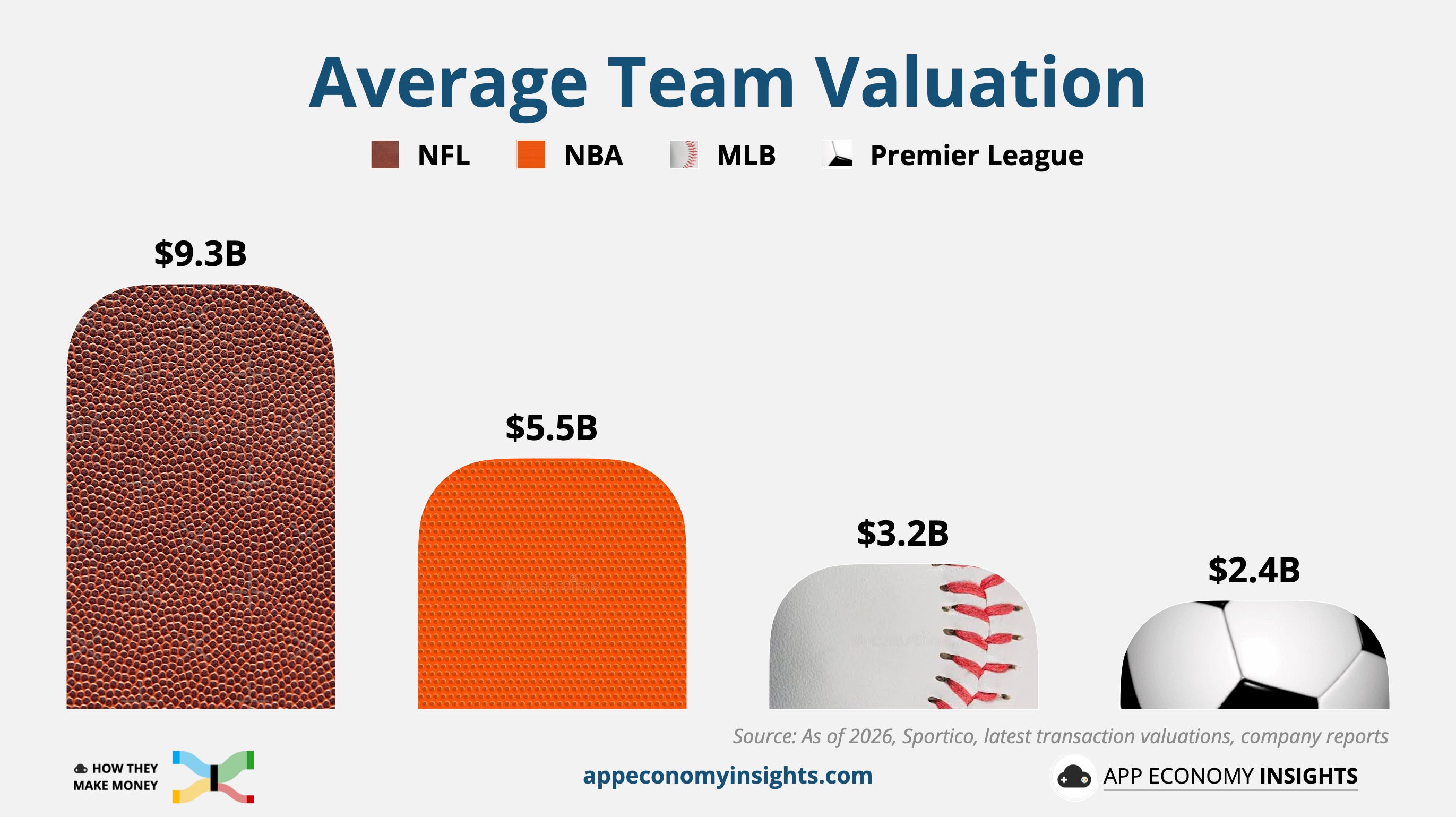
The average NFL franchise is now worth about $9.3 billion, nearly four times the $2.4 billion average Premier League club. NBA teams command more than twice the valuation, while even MLB sits comfortably ahead.
European football generated a record €40.2 billion in revenue last season, up 6% Y/Y, including nearly a quarter from the Premier League alone. The sport has moved well beyond its post-pandemic recovery as commercial revenue, expanded competitions, and global audiences continue to grow.
Yet team values are rising much faster than the businesses underneath them.
That leaves us with the more interesting question: why does an NFL or NBA franchise command such a large premium over a Premier League club?
2. 🏟️ Why these assets are different
Only a finite number of sports teams are truly compelling.
You can start another software company, restaurant chain, or even another football club. But you cannot recreate Liverpool FC. Its history, trophies, supporters, rivalries, and place in the culture have accumulated over more than a century.
That scarcity is becoming more valuable for three reasons:
🔒 Supply is fixed. Only so many teams have genuine global relevance, while the number of billionaires, private-equity firms, and sovereign investors who can buy them keeps growing.
📺 Live attention is scarce. Streaming and social media have fragmented entertainment, but sports still bring millions of people together at the same time. That makes elite games unusually valuable to broadcasters, streamers, advertisers, and sponsors.
🌍 Monetization is global. Anfield holds about 60,000 fans, but Liverpool can monetize supporters globally through sponsorships, merchandise, tours, licensing, and digital media. The stadium caps matchday revenue, but the brand reaches far beyond.
That last point is becoming increasingly important. Among the world’s 20 highest-revenue football clubs, commercial revenue has overtaken broadcasting as the largest income source, as clubs turn global followings into sponsorship, merchandise, and other brand revenue.
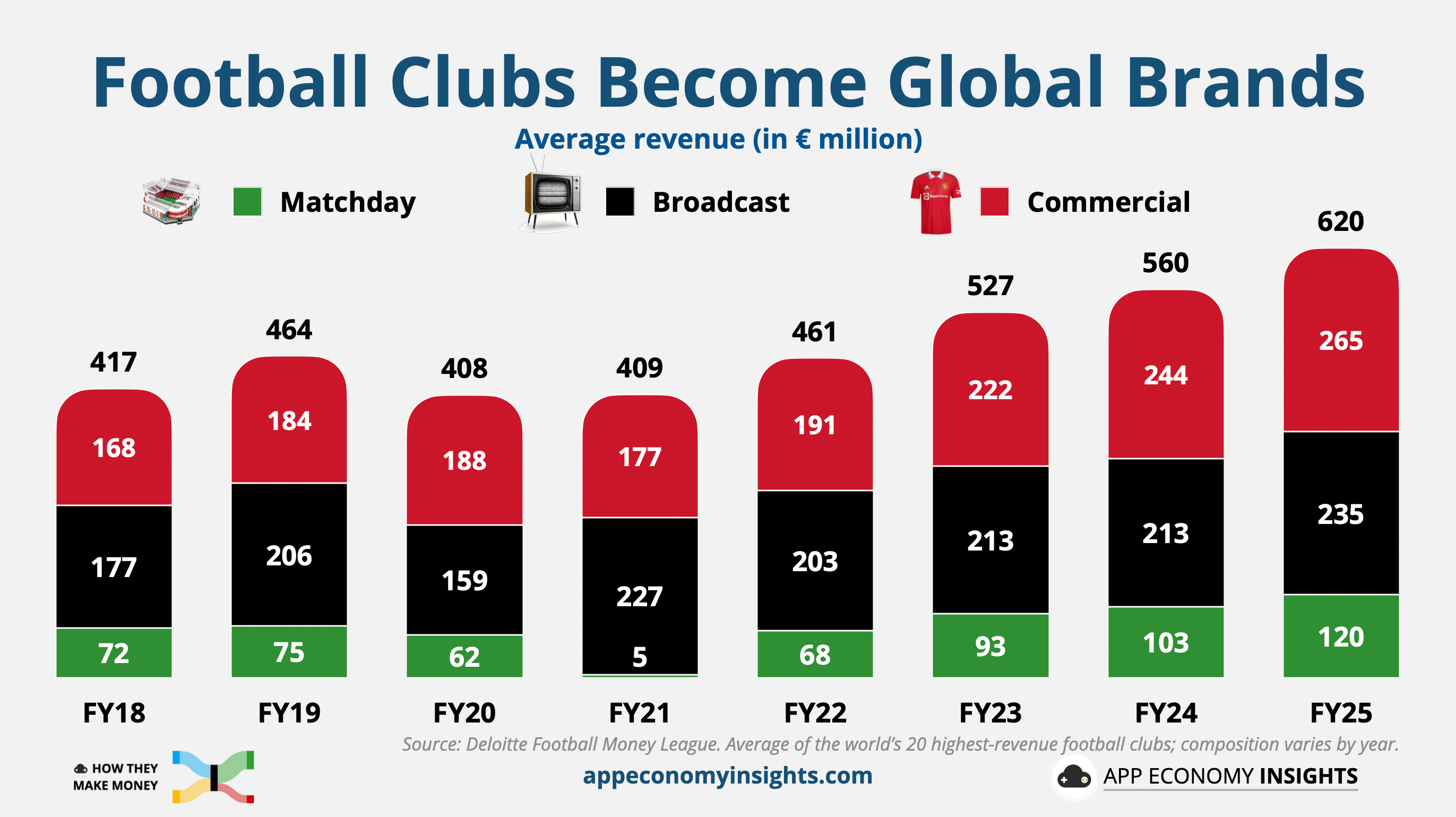
Liverpool itself offered a fresh example this month, signing Turkish Airlines as its next main shirt sponsor in a five-year deal reportedly worth more than £300 million.
Sports teams are also unusual because buyers don't necessarily maximize next year’s earnings. Returns can come from cash flow, long-term asset appreciation, and the non-financial value of ownership—prestige, access, influence, or simply owning a team capable of winning trophies.
That makes a club like Liverpool an unusual asset: scarce by definition, but increasingly monetizable.
Scarcity helps explain why sports teams keep appreciating. But it does not explain why the average NFL team is worth almost four times as much as the average Premier League club. For that, we need to look at the economics.
3. 🏈 Why the NFL and NBA are more profitable
At first, the valuation gap might seem easy to explain. You might assume American teams simply generate far more revenue. They don’t.
The average NFL franchise generates roughly $720 million a year in revenue, well ahead of the pack. But average revenue across the NBA, MLB, and Premier League is remarkably similar, at roughly $425–$450 million per team.
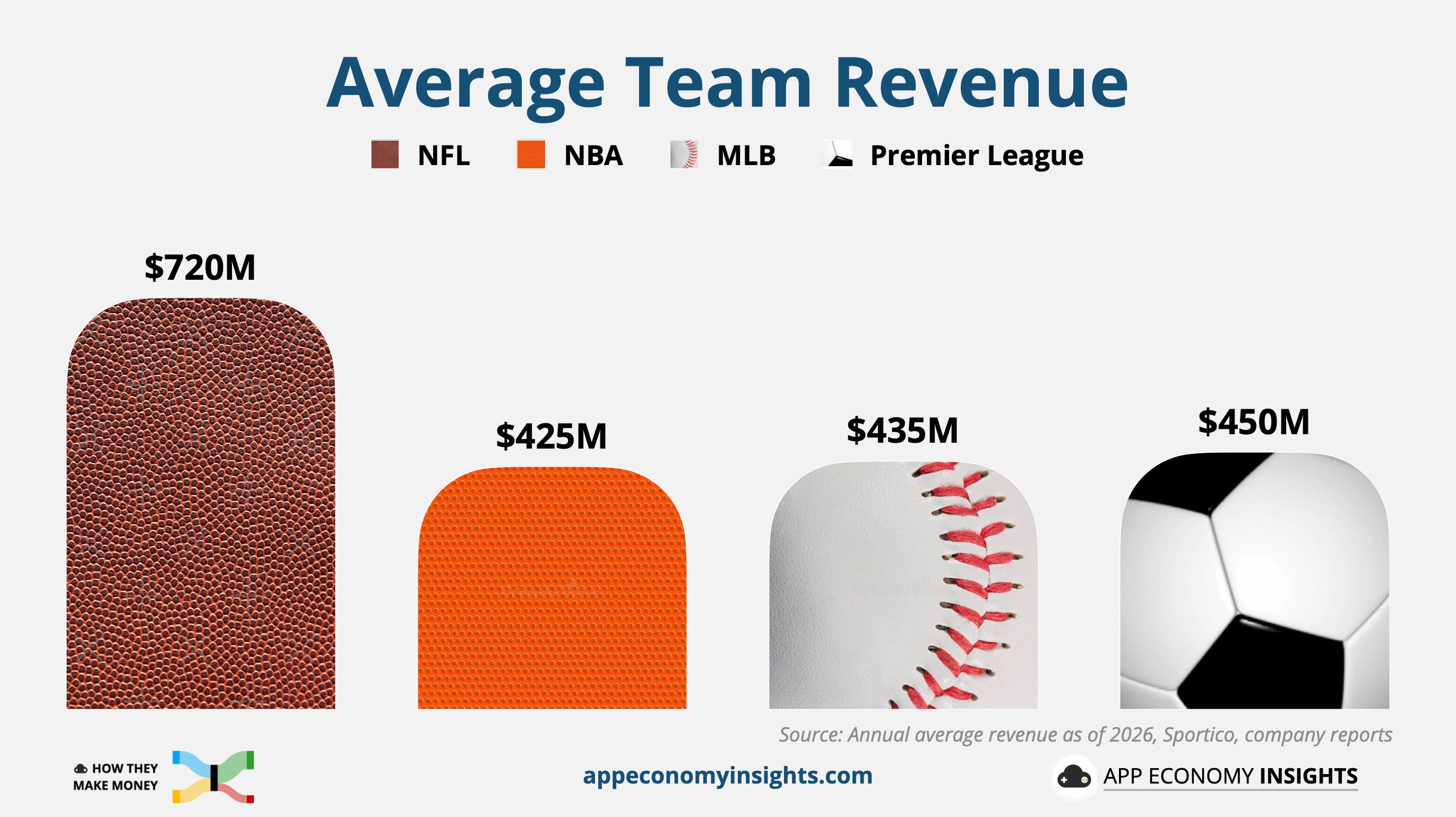
That makes the valuation discrepancy more surprising. The average Premier League club generates slightly more revenue than the average NBA team, yet clubs are worth less than half as much on average.
The real difference appears further down the income statement. The average NFL team generates around $127 million in operating profit, while the NBA averages roughly $113 million. Premier League clubs average only about $17 million.
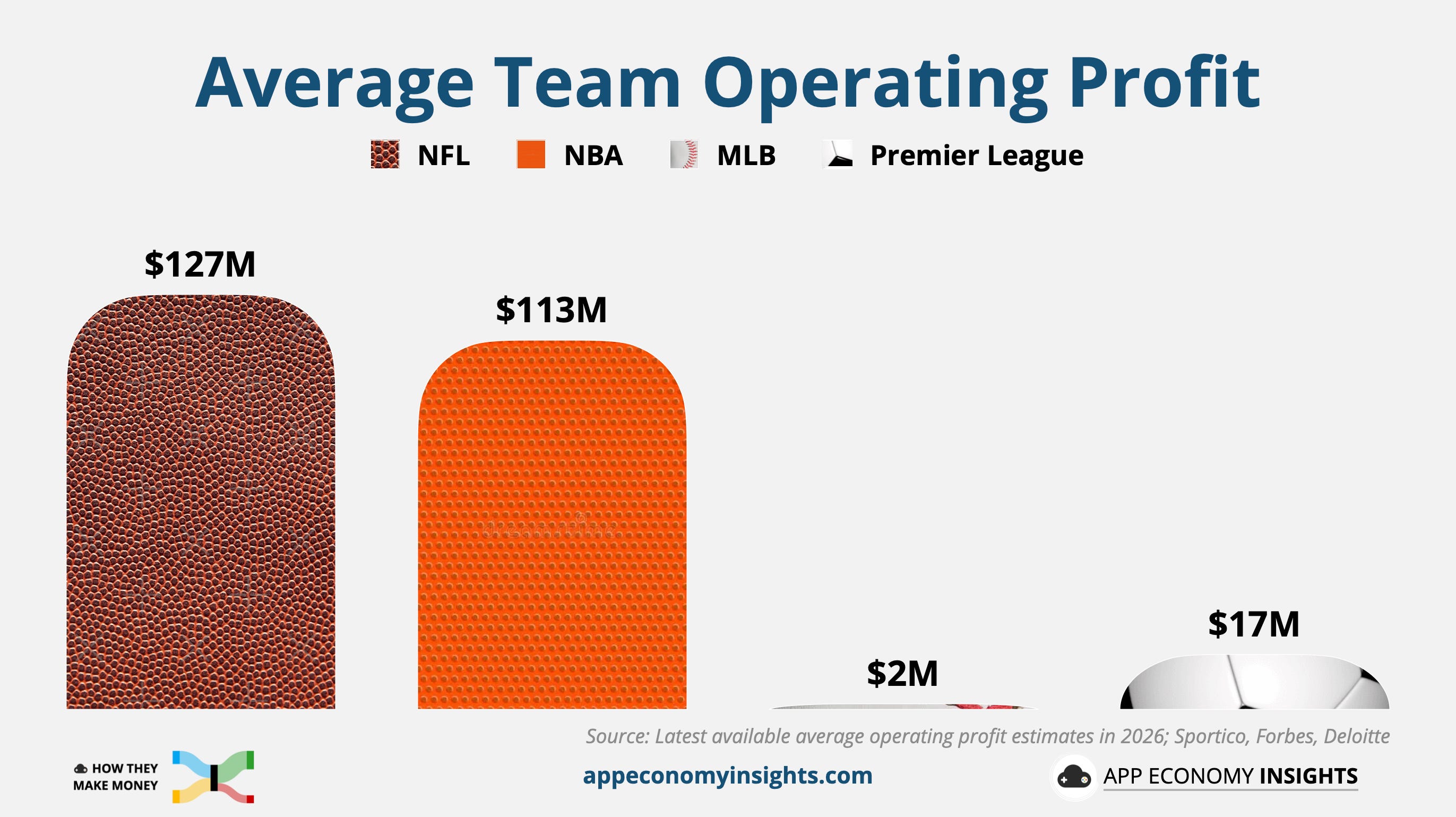
Why are Premier League teams barely breaking even? The leagues create very different incentives to spend.
🪂 Failure has consequences. An NFL or NBA team can finish last and return the following season with its league membership and national revenue intact. Conversely, a Premier League club can be relegated. The all-important UEFA Champions League involves tens of millions in revenue at stake, but only for the teams finishing in the top four or five. Football teams therefore have to spend partly to protect the revenue they already have.
💰 Player spending is constrained. The NFL and NBA use salary caps and other spending rules that prevent owners from endlessly bidding against one another for talent. European football has introduced tighter financial rules, but clubs still have enormous incentives to funnel incremental revenue into wages and transfers.
📺 Revenue is shared. US leagues redistribute a large portion of national media revenue across teams, creating a much higher and more predictable floor. Every NFL team received about $453 million in shared league revenue last season, regardless of whether it won the Super Bowl or finished near the bottom.
The contrast can become almost comical. A Premier League club fighting relegation may spend heavily in January because losing could threaten the economics of the entire business. An NBA team whose season has slipped away can instead prioritize younger players and draft position, because losing games does not threaten its place in the league.
That difference in urgency matters. In European football, additional revenue often becomes additional player spending because standing still means falling behind.
Liverpool’s FY25 revenue flowed back into wages, player costs, and the infrastructure required to remain one of Europe’s elite clubs. Cutting those costs dramatically might improve margins today, but it could also reduce the odds of qualifying for the Champions League tomorrow.
The NFL and NBA have effectively designed that arms race out of their economics. Owners still compete fiercely to win, but the rules make it much harder to compete away all the profit. That helps explain why similar revenue levels can support dramatically different valuations.
💡 The scarcity trade
That brings us back to Bezos and Liverpool.
Liverpool combines something increasingly rare: a global audience, a century of brand equity, and a place in competitions that billions of people care about. Its economics may never resemble those of an NFL franchise, but the opportunity extends far beyond next year’s profit through higher media rights, commercial growth, and continued appreciation of the club itself.
That is the common thread across Liverpool, the Lakers, and the NFL’s most valuable franchises. Their economics differ dramatically, but truly iconic teams remain in fixed supply while the number of investors who can own them keeps growing.
So Bezos is not buying Liverpool for the earnings it produces today.
He is buying an asset the world cannot make more of.

That’s it for today.
Happy investing!
Want to sponsor this newsletter? Get in touch here.
Thanks to Fiscal.ai for being our official data partner. Create your own charts and pull key metrics from 50,000+ companies directly on Fiscal.ai. Save 15% with this link.
Disclosure: I own AAPL, AMZN, GOOG, and META in App Economy Portfolio. I share my ratings (BUY, SELL, or HOLD) with App Economy Portfolio members.
Author's Note (Bertrand here 👋🏼): The views and opinions expressed in this newsletter are solely my own and should not be considered financial advice or any other organization's views.