


Welcome to the Saturday PRO edition of How They Make Money.
Over 300,000 subscribers turn to us for business and investment insights.
In case you missed it:
Premium members get:
📊 Monthly reports: 200+ companies visualized.
📩 Tuesday articles: Exclusive deep dives and insights.
📚 Access to our archive: Hundreds of business breakdowns.
PRO members get everything PLUS:
📩 Saturday PRO reports: Timely insights on the latest earnings.
Today at a glance:
📱Apple: Ternus Handoff
🕶️ Meta: AI Bill Comes Due
📱 Samsung: Records Meet A Rout
💳 Visa: Volume Accelerates
💳 Mastercard: The Crack Didn't Widen
⏳ AbbVie: Growth Engines Hold
🧠 Lam Research: The Ramp Steepens
🥤 Coca-Cola: Volume Carries The Quarter
🧴 P&G: Iran Cost Bites
📱 Arm: Data Center Offsets Phones
🔬 KLA: 2027 Gets Bigger
🧬 AstraZeneca: Pipeline On Trial
🛩️ Airbus: The Ramp Finally Shows
📲 Qualcomm: Diversification On Trial
🛩️ Boeing: Cash Turns Positive
☕️ Starbucks: Measurable Momentum
🔒 Fortinet: The Surge Extends
📦 UPS: The Reset Lands
💡 Cadence: AI Demand Compounds
🪶 Robinhood: Firing On All Cylinders
🍪 Mondelez: North America Turns
🏨 Hilton: Mid-Scale Rebounds
🏎️ Ferrari: Scarcity Pays
🚙 Ford: Trucks Cover The Damage
💳 PayPal: The $60 Question
📈 Coinbase: Winning a Smaller Market
🎤 Live Nation: World Tour Expands
🌯 Chipotle: Momentum Meets A Wobble
🌮 Yum! Brands: Pizza Hut Heads Out
🍫 Hershey: Price Over Volume
👾 Roblox: Monetization Trade-Off
👽 Reddit: Monetization Outruns Users
⚡ Rivian: R2 Hits the Road
🏦 SoFi: Records Meet A Shrug
🦷 Align: Scanners Down
🩺 Teladoc: The BetterHelp Pivot

1.📱Apple: Ternus Handoff
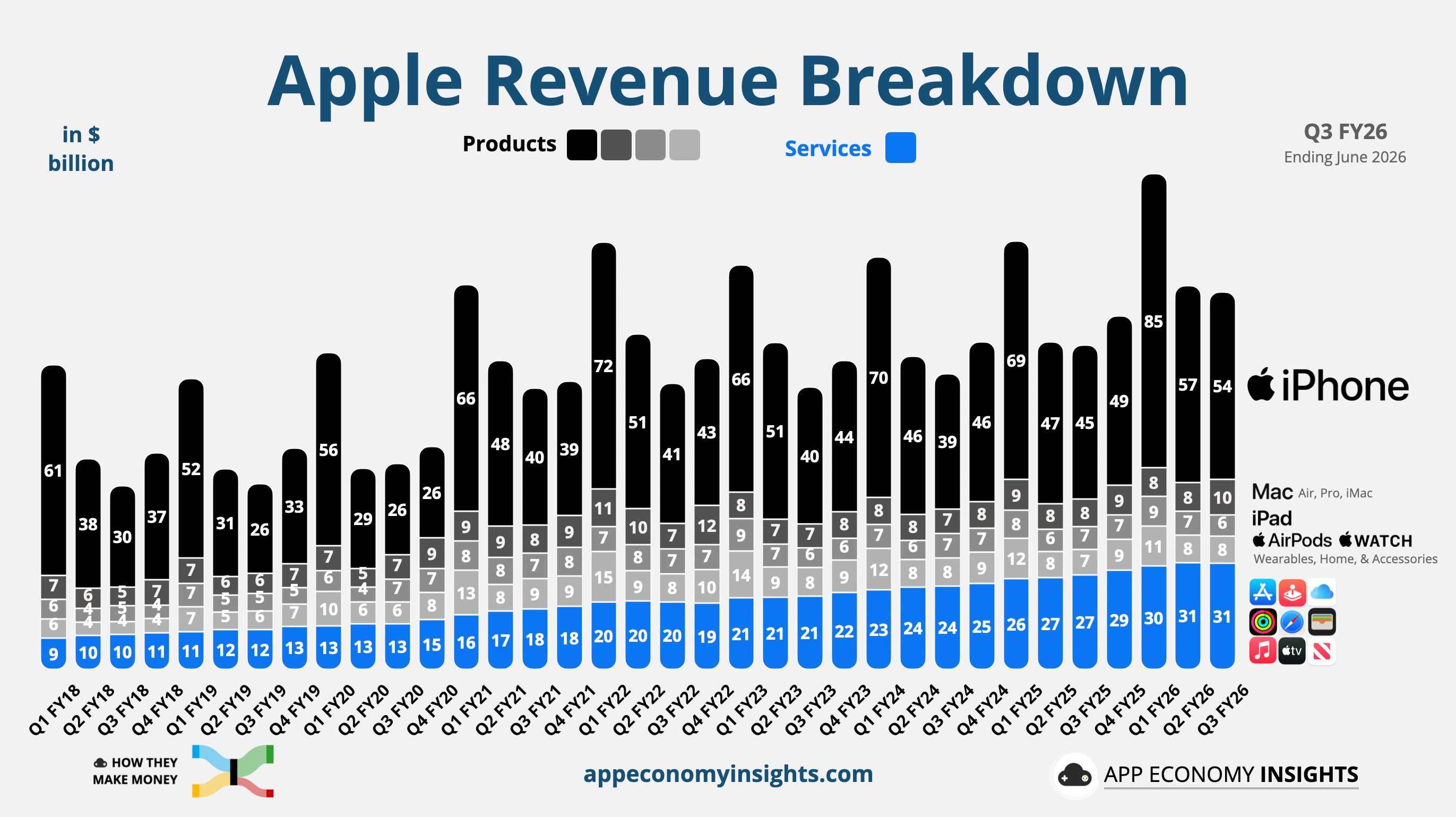
Apple’s Q3 revenue rose 16% Y/Y to $109.4 billion ($0.5 billion beat), while EPS reached $2.02 ($0.13 beat). Tariff refunds contributed $0.11 to EPS, but underlying results still came in ahead of expectations. These were June quarter records, yet shares fell about 6% after earnings.
iPhone revenue grew 22% to a record $54.3 billion.
Mac jumped 29% to a record $10.4 billion.
China rebounded 22% to $18.8 billion.
Services slowed to 12% growth, reaching $30.7 billion.
This was Tim Cook’s final earnings call before John Ternus takes over in September. He leaves Apple with a good problem to have: the company cannot make enough devices.
Cook said unexpectedly strong iPhone and Mac demand exhausted Apple’s flexibility to secure more advanced chips. These constraints primarily affected Mac this quarter and will broaden to iPhone, Mac, and iPad in the September quarter. Apple still guided revenue growth to 9%–11%, with iPhone expected to grow in the mid-teens, but the outlook came in below consensus.
Memory is becoming the larger margin problem. Cook described the market as a “hundred-year flood,” with rapidly rising prices already forcing Apple to increase some Mac and iPad prices. Excluding tariff benefits, gross margin declined sequentially, and Apple expects another step down in Q4 as cheaper inventory runs out.
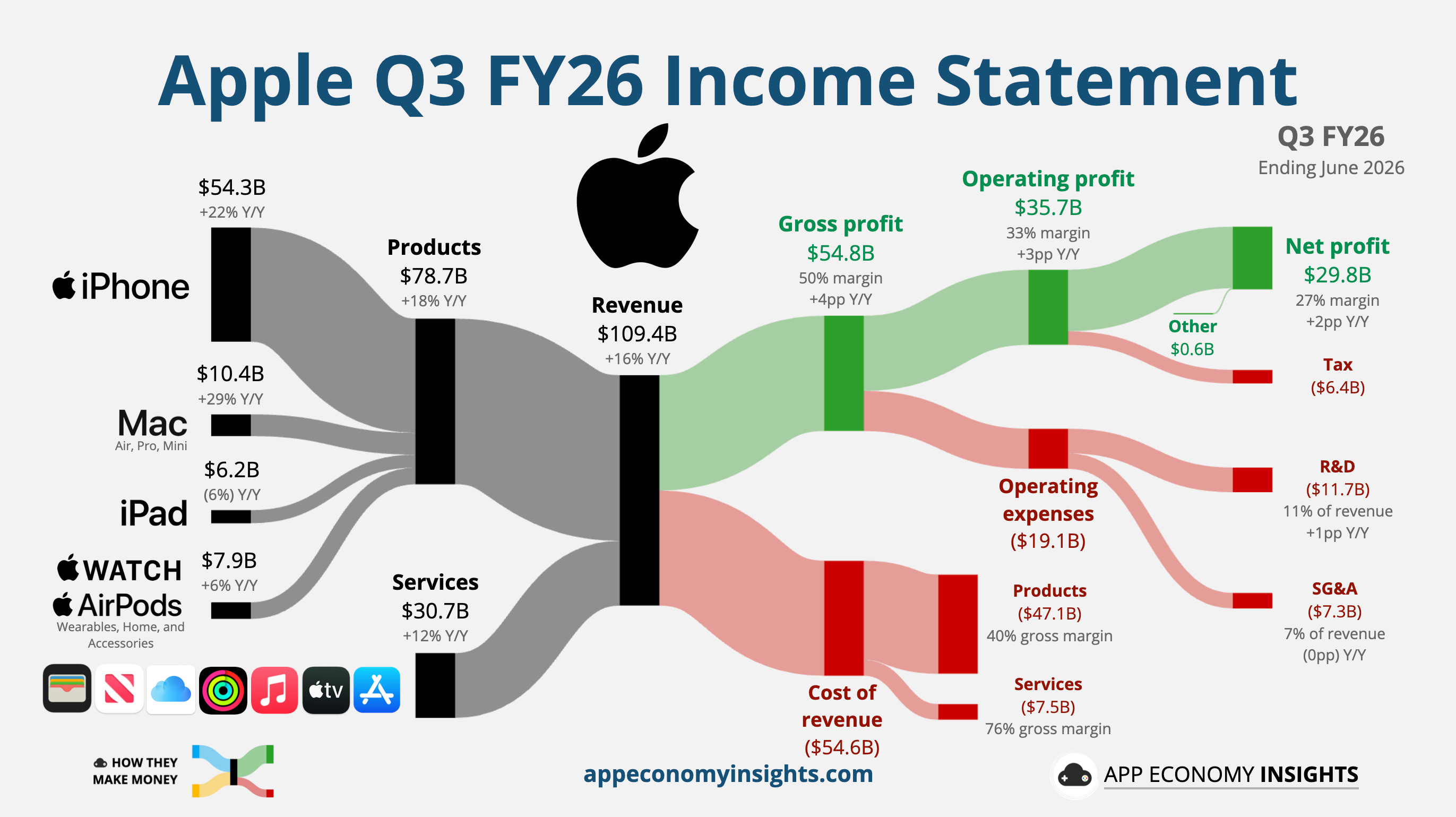
Meanwhile, R&D spending rose 32% Y/Y to $11.7 billion as Apple accelerated its AI investment. Cook also suggested heavy Siri users could eventually be pushed toward more expensive iCloud+ plans, offering an early glimpse of how Apple might monetize its AI overhaul.
Ternus inherits one of Apple’s strongest product cycles in years, but also a supply chain that cannot fully support it and a margin structure increasingly exposed to memory inflation. The next iPhone cycle must prove Apple can manage both pressures while convincing customers that its AI catch-up is finally real.
2. 🕶️ Meta: AI Bill Comes Due
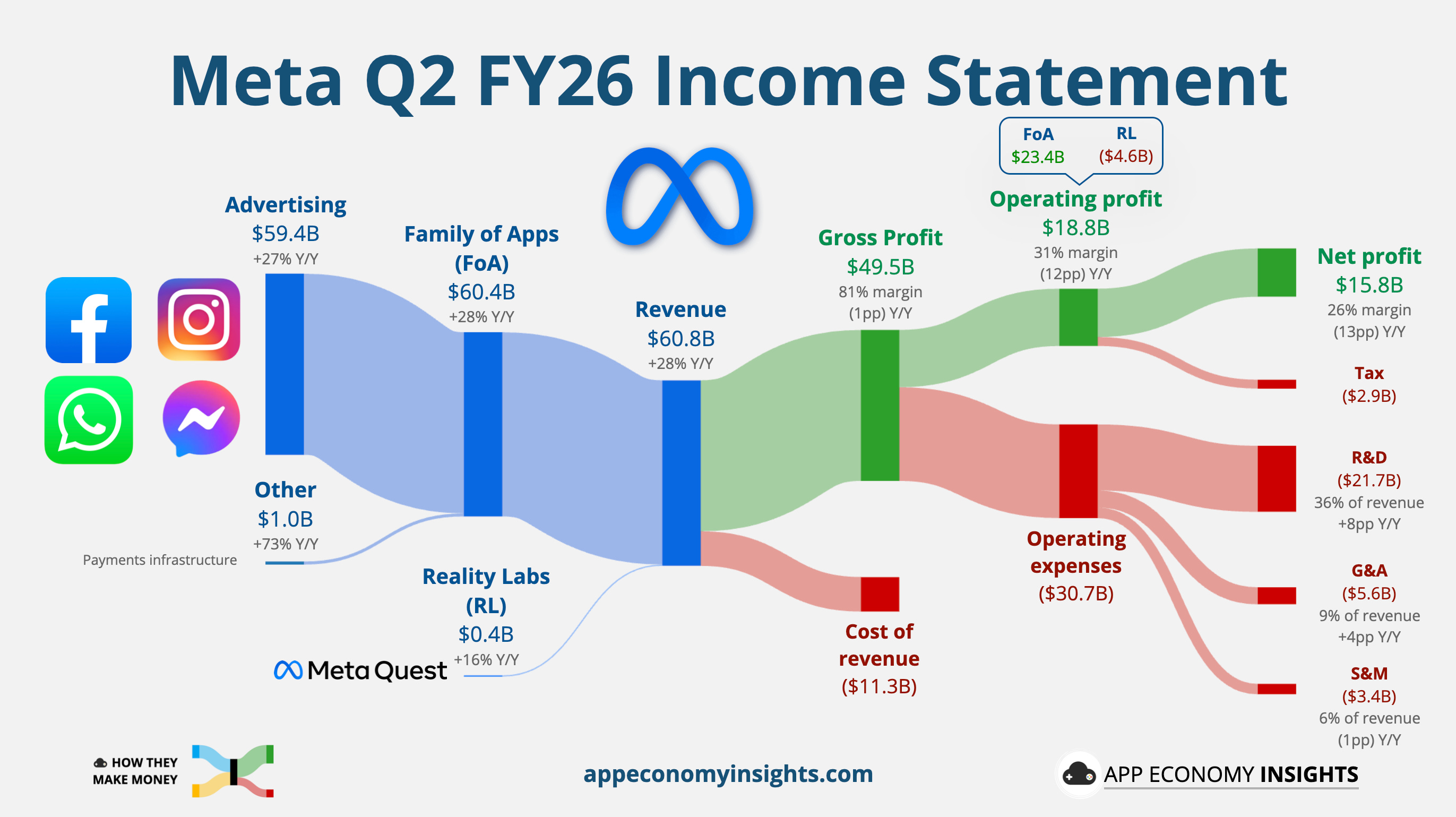
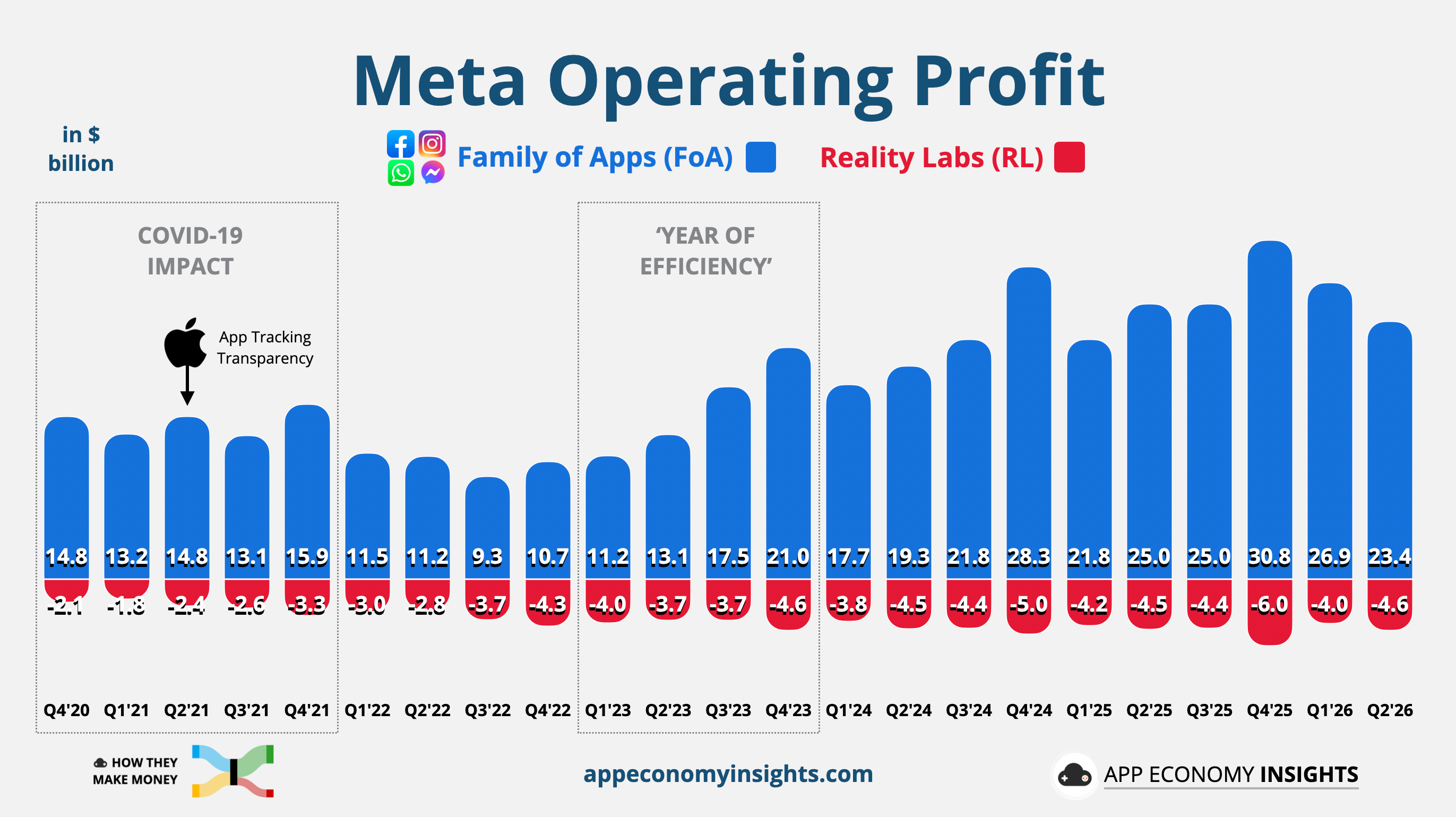
Meta’s Q2 revenue rose 28% Y/Y to $60.8 billion ($0.5 billion beat). GAAP EPS fell 13% to $6.18, but the quarter included $2.4 billion in legal charges related to youth-safety litigation and $1.2 billion in severance costs. Excluding those items, operating income would have risen 9% rather than declined 8%. Despite the underlying beat, shares fell as much as 10%.
The selloff came down to two things:
Free cash flow nearly disappeared. Meta generated $31.9 billion in operating cash flow but spent $31.1 billion on capex and finance leases, leaving just $784 million in free cash flow, down 91% Y/Y. It also issued $24.9 billion of debt and repurchased no stock. Meta can afford the buildout. But for the first time, AI spending has effectively consumed the quarter’s free cash flow, halted buybacks, and pushed the company into the debt market.
The CapEx floor moved higher again. Meta narrowed its FY26 outlook to $130–$145 billion from $125–$145 billion, raising the bottom end for the second consecutive quarter. Its new 1 GW El Paso data center venture shows how it plans to fund the next stage: BlackRock will own 80%, while Meta retains 20% and leases the entire campus. The structure reduces the upfront cash burden without reducing Meta’s long-term commitment.
The irony is that AI is already paying off inside the ad business. Advertising revenue grew 27% Y/Y as impressions increased 14% and average price per ad rose 12%. Meta’s latest models generated an 8% increase in ad clicks and a 16% uplift in Facebook conversions, while Advantage+ products surpassed a $75 billion annual revenue run rate. AI is already producing measurable returns inside the existing business.
Family DAP reached 3.60 billion, Instagram crossed two billion daily users, and Threads surpassed 500 million monthly users. WhatsApp paid messaging and subscriptions also pushed Family of Apps ‘other’ revenue above $1 billion for the first time.
Zuck also offered a more concrete return path than last quarter. Beyond improving ads and engagement, Meta may sell paid model access and lease excess computing capacity. He said outside buyers have offered a “meaningful premium” to Meta’s cost, though building a real cloud business will require distribution and software capabilities Meta does not yet have.
Reality Labs lost another $4.6 billion, while revenue rose 16% on stronger AI-glasses sales.
Meta guided Q3 revenue to $61–$64 billion, with the midpoint below consensus, and raised FY26 expenses to $165–$169 billion. Meta is already earning more from ads, and it now has plausible ways to monetize models and excess compute. The problem is that the spending is arriving all at once, while some of the new revenue streams will take time to meaningfully contribute.