


Welcome to the Saturday PRO edition of How They Make Money.
Over 300,000 subscribers turn to us for business and investment insights.
In case you missed it:
Premium members get:
📊 Monthly reports: 200+ companies visualized.
📩 Tuesday articles: Exclusive deep dives and insights.
📚 Access to our archive: Hundreds of business breakdowns.
PRO members get everything PLUS:
📩 Saturday PRO reports: Timely insights on the latest earnings.
Today at a glance:
🛒 Costco: E-Commerce Surge
🦎 Berkshire: Abel Takes the Reins
📶 Marvell: Surprise Data Center Demand
🌊 Sea: Margin Fears Overshadow Growth
🎯 Target: Turnaround Takes Root
🚚 JD.com: Price War Takes Its Toll
👟 Adidas: New Mid-Term Targets
🧑⚕️ Veeva: Agentic Transformation
🌱 MongoDB: Guidance Anxiety
🌐 Samsara: AI Takes the Wheel
👟 On: Incoming Deceleration
🔐 Okta: Securing the AI Agent Era
🛒 Best Buy: Profits Outshine Sales Dip
💳 StoneCo: Back to Basics
🛠️ GitLab: Growth Hiccup
📝 Asana: Agentic Transition

1. 🛒 Costco: E-Commerce Surge
Costco delivered another strong beat across the board for its Q2 FY26 (ending in February). Total revenue rose 9% Y/Y to $69.6 billion ($280 million beat), while GAAP EPS came in at $4.58 ($0.04 beat).
When stripping out the volatility of gas prices and foreign exchange, core comparable sales grew 7% globally, driven by a 3% increase in foot traffic and a 4% jump in the average customer ticket.
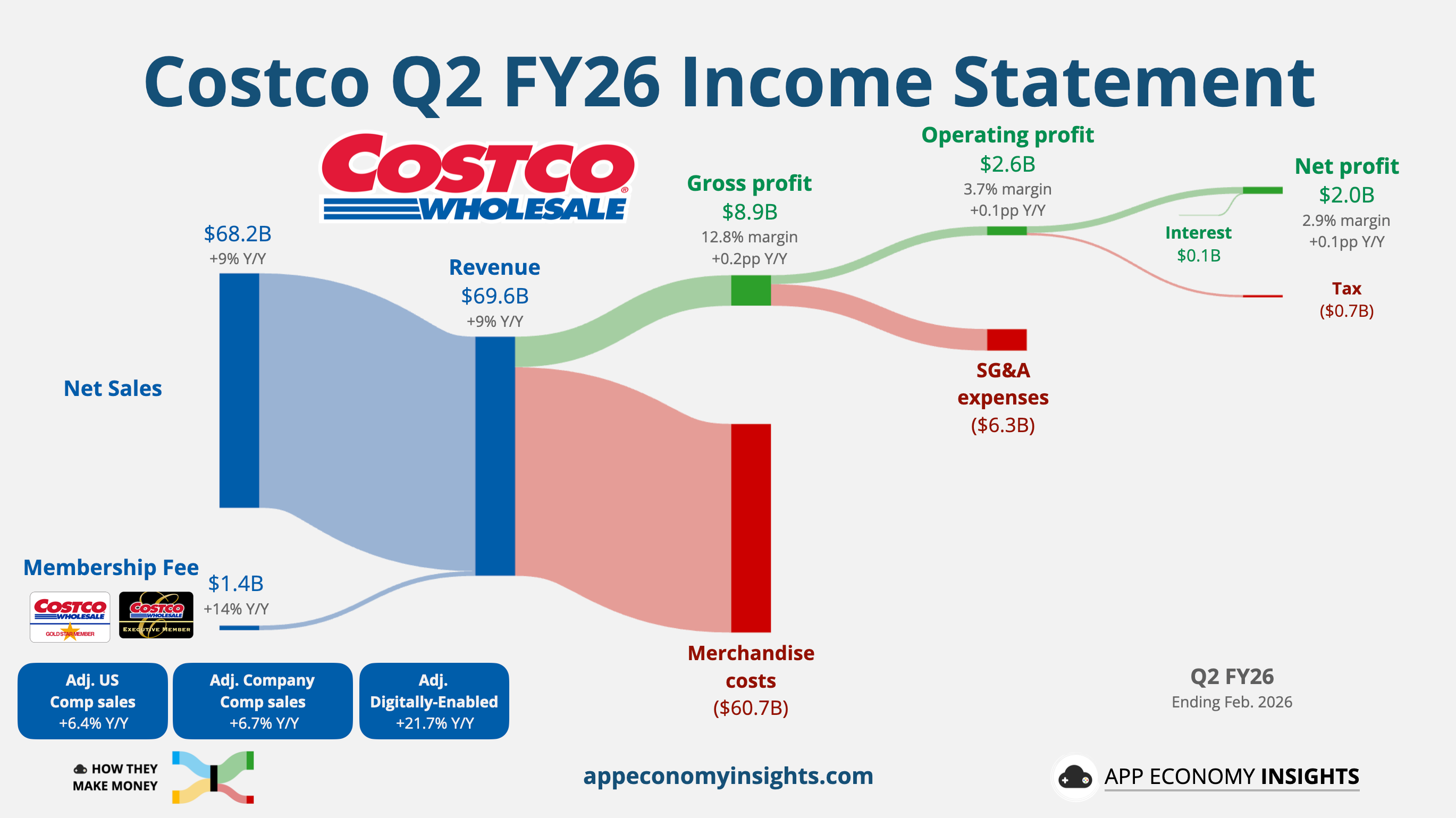
Digitally-enabled comparable sales growth accelerated to 23% Y/Y. Management highlighted that new digital enhancements are driving meaningful improvements in both sales and checkout speeds. That includes things like personalized product recommendations, mobile wallet upgrades, and automated pay stations.
Memberships continue to be a growth and profit driver, generating $1.4 billion in fee income (up 14% Y/Y). While the worldwide renewal rate held steady sequentially at 89.7%, the US and Canada renewal rate ticked down another 10 basis points to 92.1%, reflecting the ongoing trend of younger online shoppers renewing at slightly lower rates than traditional in-store signups.
The most notable development during the earnings call centered on tariffs. Following the Supreme Court’s recent ruling striking down previous global tariffs, CEO Ron Vachris stated the company is actively evaluating potential refunds. Consistent with Costco’s “first to lower, last to raise” philosophy, Vachris committed to returning any recovered tariff funds directly to members through lower prices. To manage the new wave of tariffs currently proposed, the company is shifting supply chains and leaning heavier on its Kirkland Signature private label.
The market continues to pay up for Costco’s execution, with the stock trading at nearly 48x forward earnings.

2. 🦎 Berkshire: Abel Takes the Reins
Berkshire Hathaway’s fourth quarter marked the official beginning of the Greg Abel era, but the headline numbers triggered a post-earnings selloff. Q4 operating earnings dropped 30% to $10.2 billion, sending shares down nearly 5%. However, the headline decline was exacerbated by a steep $1.6 billion non-cash goodwill impairment charge tucked into the annual report, likely related to its Pilot truck-stop business. Adjusting for this charge, the operating decline was closer to 19%.
The primary drag on the quarter was a sharp reversal in insurance underwriting profits, which slumped 54% to $1.6 billion amid rising claims and intense competition. Geico was particularly weak, taking a hit from higher advertising expenses.
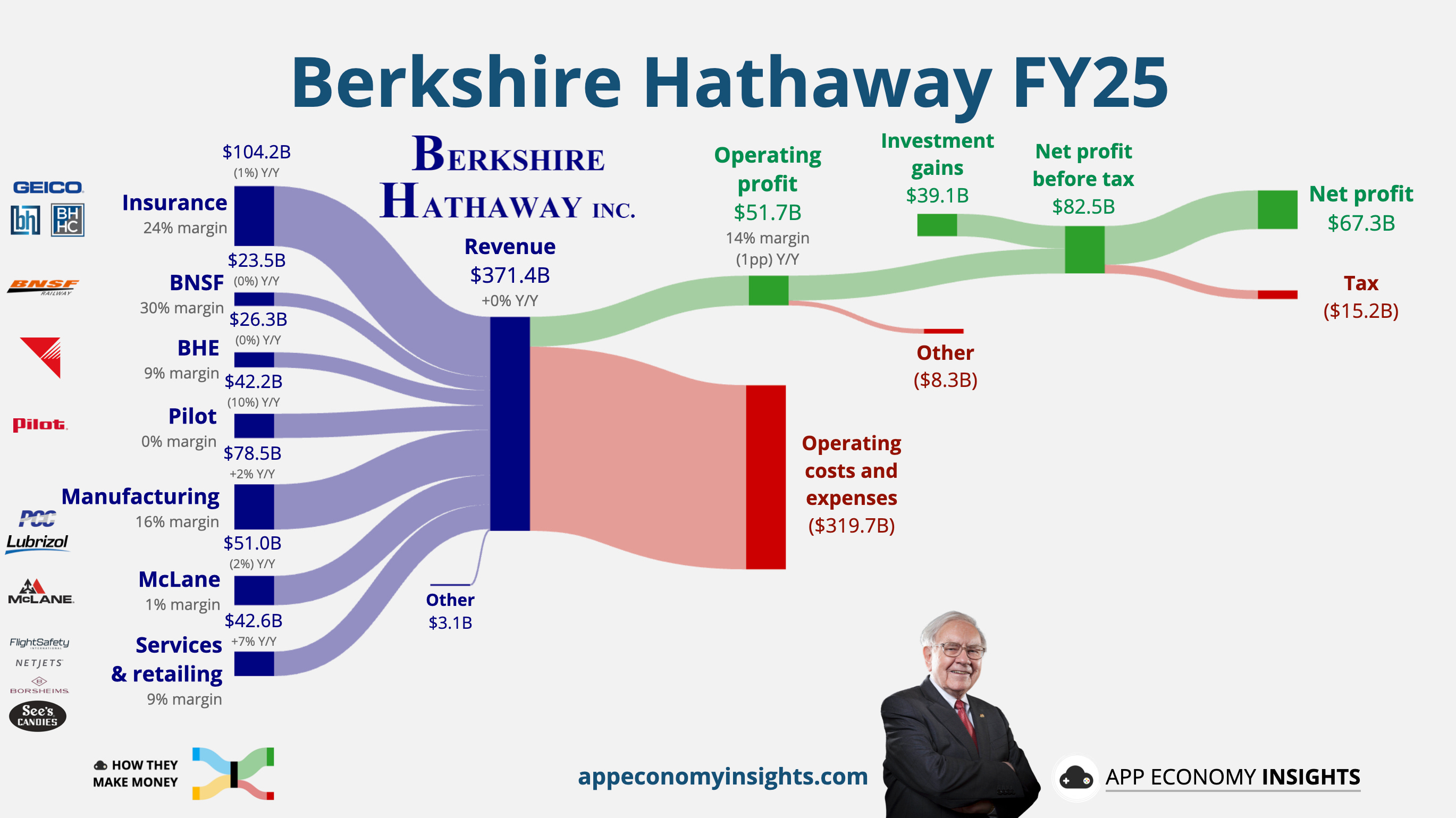
For the full-year FY25, revenue was flat and operating earnings were slightly down.
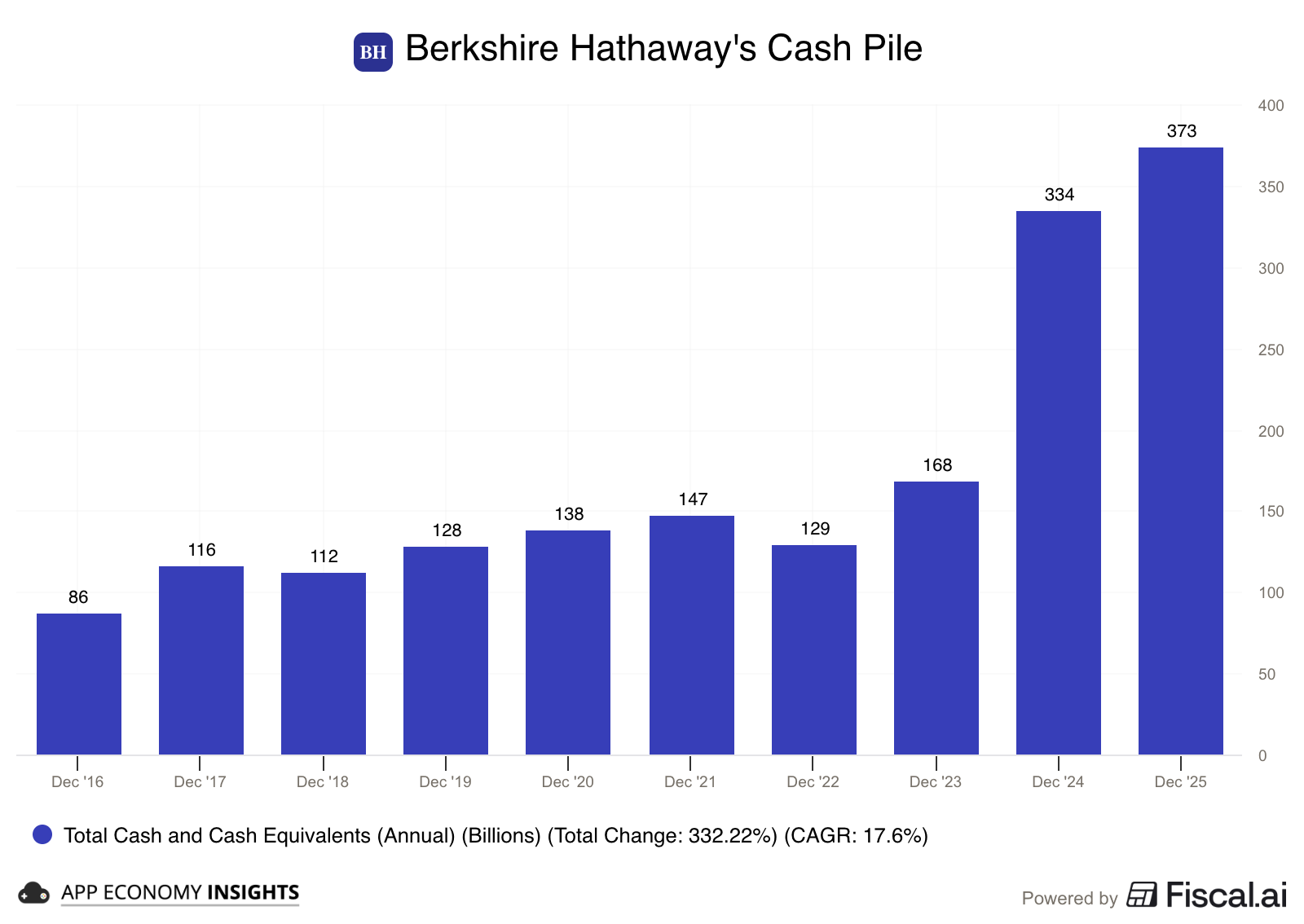
Berkshire’s legendary cash pile remains near record highs at $373 billion. Despite the massive war chest and a recent dip in the stock price, Berkshire’s buyback drought has now extended to six consecutive quarters. The conglomerate also remained a net seller of equities, unloading $3.2 billion in the quarter. In his inaugural shareholder letter, CEO Greg Abel explicitly ruled out a cash dividend, maintaining that capital will only be retained if it creates more than a dollar of market value for every dollar kept.
Abel used his first letter to reassure investors that Warren Buffett’s core values of capital discipline and long-term investing remain firmly intact. While Abel is now CEO, the company disclosed that he must still consult with Buffett (now Chairman) before authorizing any stock repurchases. While avoiding quarterly earnings calls like his predecessor, Abel did announce a slight change to the upcoming annual meeting in May, which will feature deeper bench executives like BNSF’s Katie Farmer and NetJets’ Adam Johnson.