


Welcome to the Saturday PRO edition of How They Make Money.
Over 300,000 subscribers turn to us for business and investment insights.
In case you missed it:
Premium members get:
📊 Monthly reports: 200+ companies visualized.
📩 Tuesday articles: Exclusive deep dives and insights.
📚 Access to our archive: Hundreds of business breakdowns.
PRO members get everything PLUS:
📩 Saturday PRO reports: Timely insights on the latest earnings.
Today at a glance:
📱Apple: Memory Squeeze
🛍️ Shopify: Expectations Bite
📈 AppLovin: The Model Payoff
🌐 Arista: AI Networking Supercycle
🦾 Arm: The $2B CPU Ramp
📲 Qualcomm: Data Center Arrives
🎮 Sony: The IP Flywheel
💉 Pfizer: The Replacement Race
🧬 Amgen: Oncology Breakthrough
🇩🇰 Novo Nordisk: The Pill Pulls Ahead
🏝️ Booking: Travel Slows Again
🏨 Marriott: Travel Reaccelerates
🛖 Airbnb: Growth Reignites
✈️ Expedia: Q4 Air Pocket
☁️ Cloudflare: Higher Gear
🐶 Datadog: Guidance Gap
🤝 MercadoLibre: The Cost of Frequency
🥡 DoorDash: Grocery Endgame
🏎️ Ferrari: Luce Sells Out
☁️ Atlassian: Guidance Disconnect
🔲 Block: The Flywheel Connects
🔌 Astera Labs: Scorpio Takes Over
🍟 McDonald’s: Value Gets a Do-Over
🌮 Yum! Brands: Taco Bell’s Comeback
🎤 Live Nation: 180 Million Fans in Sight
⚡️ Axon: The Drone Timing Trap
💳 Fiserv: Finding a Floor
🇰🇷 Coupang: Margins Under Pressure
🌎 Global Payments: The Synergy Payoff
📺 Fox: Subscriber Reversal
🪙 Circle: The Arc Windfall
🍞 Toast: Growth Meets Scrutiny
🧊 Dynatrace: Growth Delayed
🏈 Flutter: Costly Comeback
👑 DraftKings: Predictions Eat the Profits
🗞️ NYT: Subscribers Rebound
🧬 Tempus AI: The 2027 Unlock
📢 HubSpot: AI Conversion Gap
🎨 Figma: The AI Trade-Off
🛵 Grab: The Third Engine
🌊 DigitalOcean: The 60% Bet
🤖 Paycom: Automation Pays Off
🔥 Match: Tinder Turns Positive
👻 Snap: Profits Outrun Ads
⚡️ Celsius: Alani Takes the Lead
🏠 Zillow: The Housing Freeze
🦉 Duolingo: The Green Machine
🏴 Klaviyo: AI Starts Converting
🚲 Peloton: Profits Before Growth
🍿 AMC: Box Office Comeback

1. 📱Apple: Memory Squeeze
Apple’s Q4 revenue (September quarter) grew 12% Y/Y to $114.5 billion ($1.1 billion beat), while EPS rose 14% to $2.10 ($0.11 beat). Results included $0.05 per share in tariff refunds. But shares slipped after earnings following weaker margin guidance.
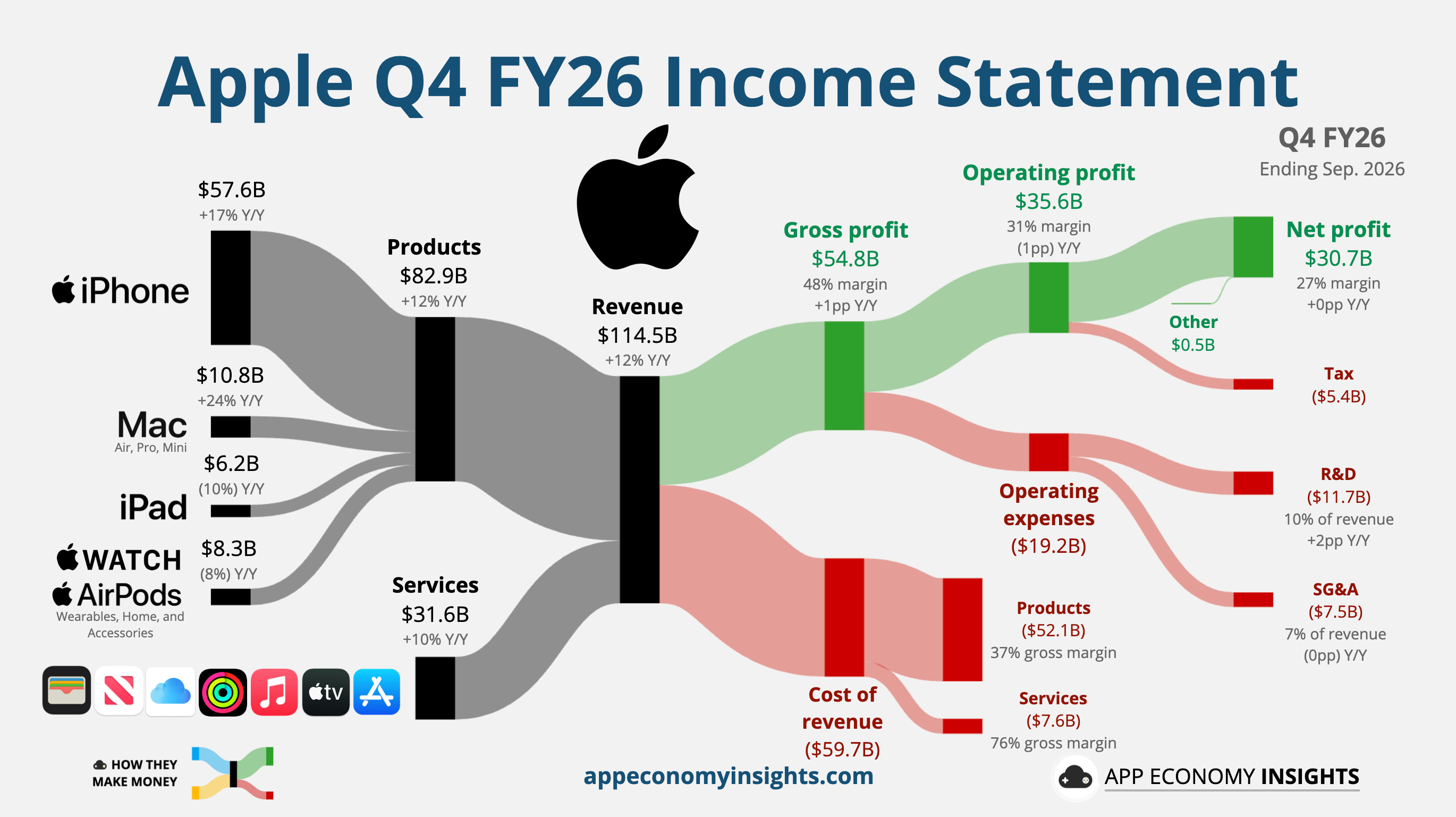
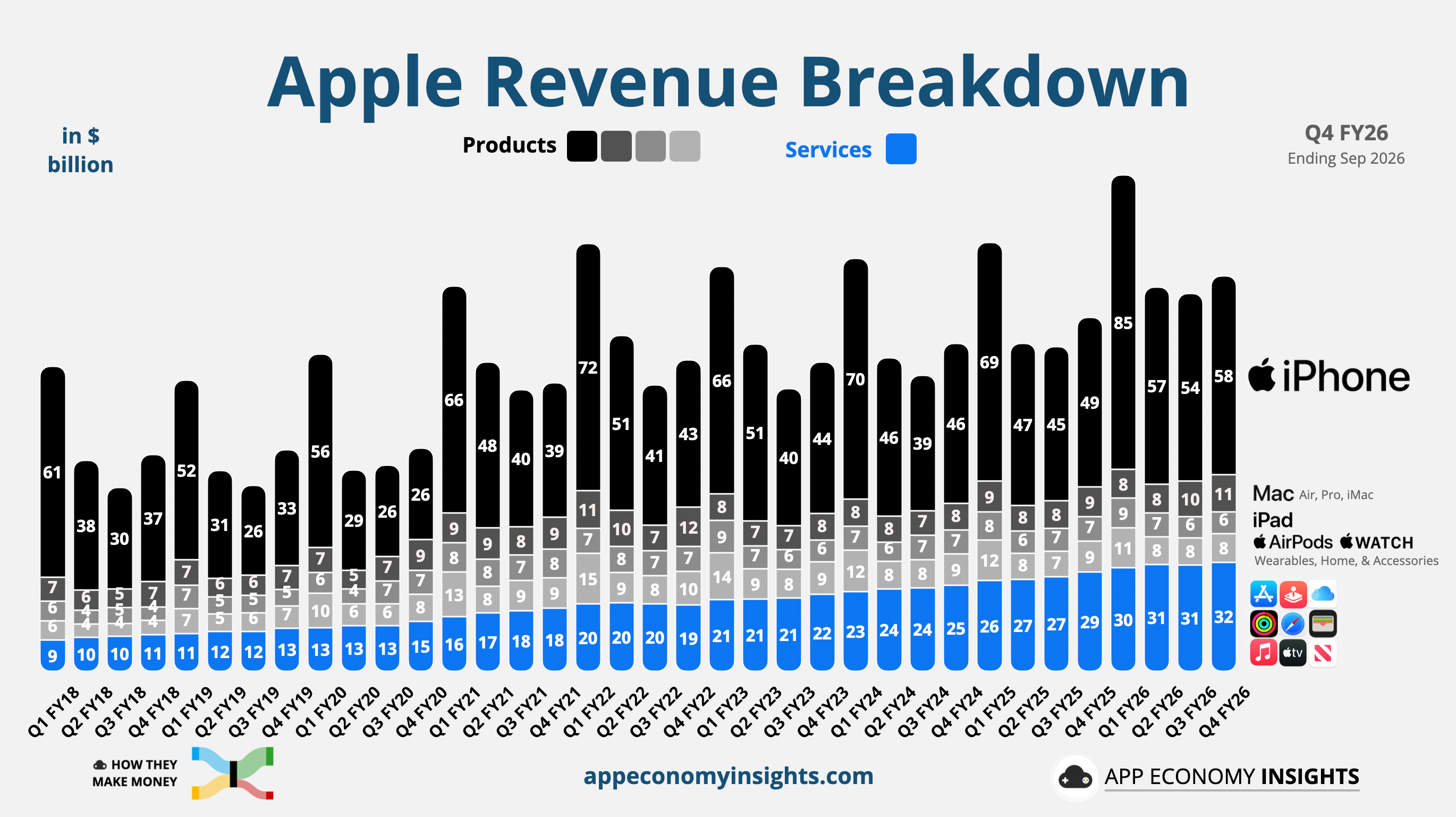
iPhone revenue grew 17% to $57.6 billion, exceeding expectations despite supply constraints. The new foldable iPhone Duo launched in October, so its early sales will contribute to Q1 FY27.
Mac revenue jumped 24% to $10.8 billion, well ahead of consensus.
Greater China grew 21% to $17.5 billion, ~$1 billion short of expectations.
Services reached a record $31.6 billion, but growth slowed from 12% in Q3 to just 10% Y/Y. Management expects another deceleration to 8%–9% in the December quarter, reflecting licensing, currency, and App Store headwinds.
The biggest problem is profitability. Gross margin fell to 48% (from 50% in Q3). Tariff refunds boosted both quarters, but the benefit shrank from two percentage points to one. Excluding refunds, gross margin declined roughly one percentage point, primarily due to rising memory costs. Management expects a further decline to 45%–46% in Q1 FY27, below the ~47% consensus.
Apple spent years keeping device prices relatively stable to expand its installed base and monetize customers through high-margin Services. Now memory inflation is forcing price increases across its product lineup, just as Services growth slows. Management says it's too early to assess the impact on demand.
New CEO John Ternus described memory pricing as unprecedented. Apple's manufacturing purchase commitments increased by $33 billion in one quarter to secure components, potentially shifting more inventory and demand-forecasting risk onto a company accustomed to extraordinary supply-chain flexibility. Advanced-chip supply constraints are easing, but memory shortages could continue restricting Mac and iPad production.
Meanwhile, Apple’s new Siri AI introduces additional infrastructure costs before meaningful monetization. Management confirmed plans to offer paid access to higher usage limits eventually, although pricing and adoption remain unclear.
Management expects holiday-quarter revenue growth of 7%–10%, above the ~6% consensus, supported by the new iPhone lineup.
Apple has emerged as a safe haven from the AI spending boom, briefly reclaiming its position as the world’s most valuable company at $5 trillion. But that perceived safety comes at a price. Shares trade at a historically elevated ~35x forward earnings. Apple has avoided the AI infrastructure spending race, but it cannot escape slowing growth and rising costs.
2. 🛍️ Shopify: Expectations Bite
Shopify’s Q3 revenue grew 32% Y/Y to $3.7 billion (roughly in line), while adjusted EPS reached $0.49 ($0.03 beat). Shares initially plunged as Shopify failed to deliver its usual top-line beat.
Gross Merchandise Value (GMV) rose 29% Y/Y to $119.1 billion, slightly below the $120 billion consensus and down from 32% growth in Q2. International GMV grew 32%, offline GMV rose 30%, and B2B GMV surged 74%, underscoring Shopify’s expansion beyond traditional online retail.
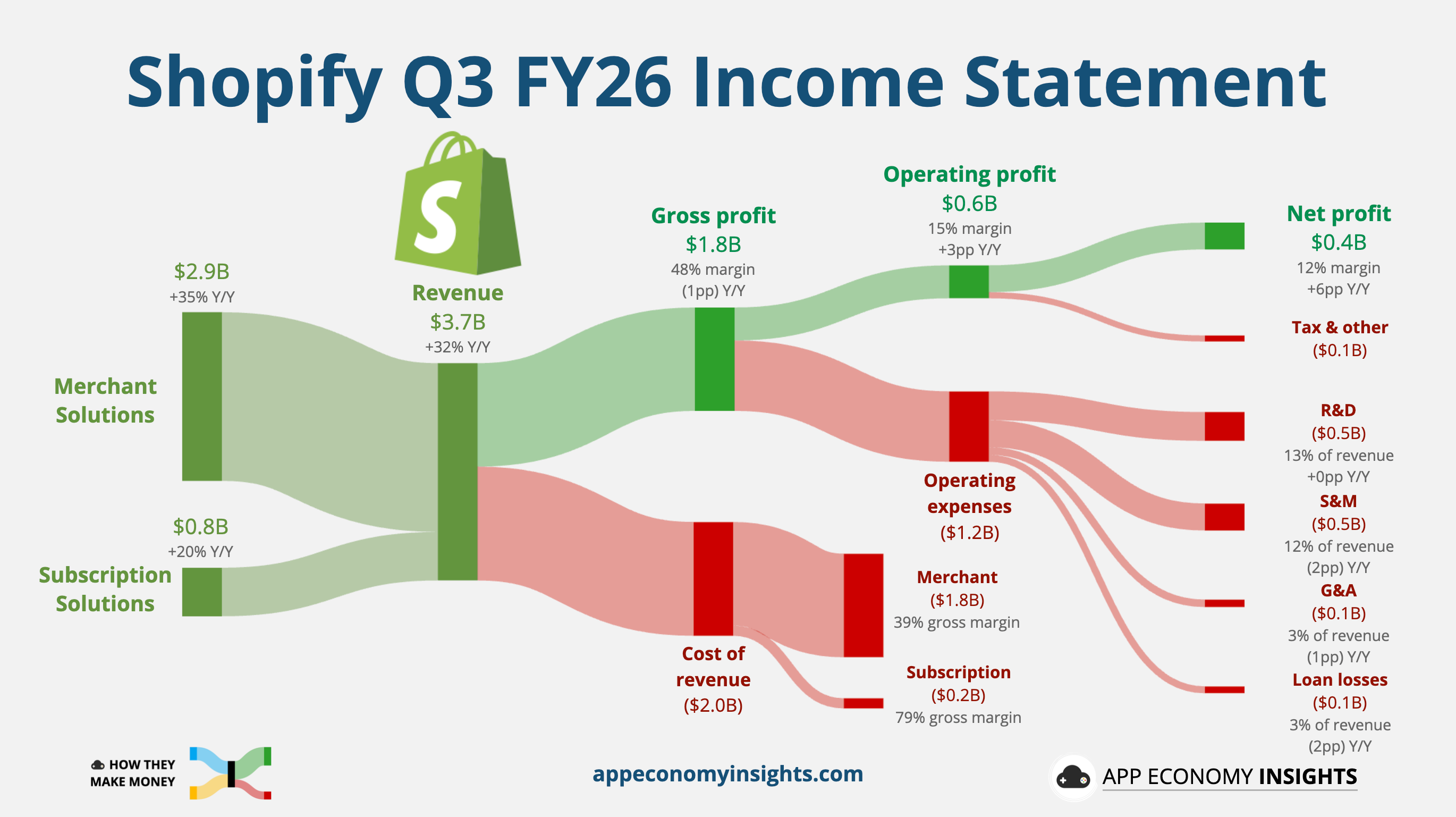
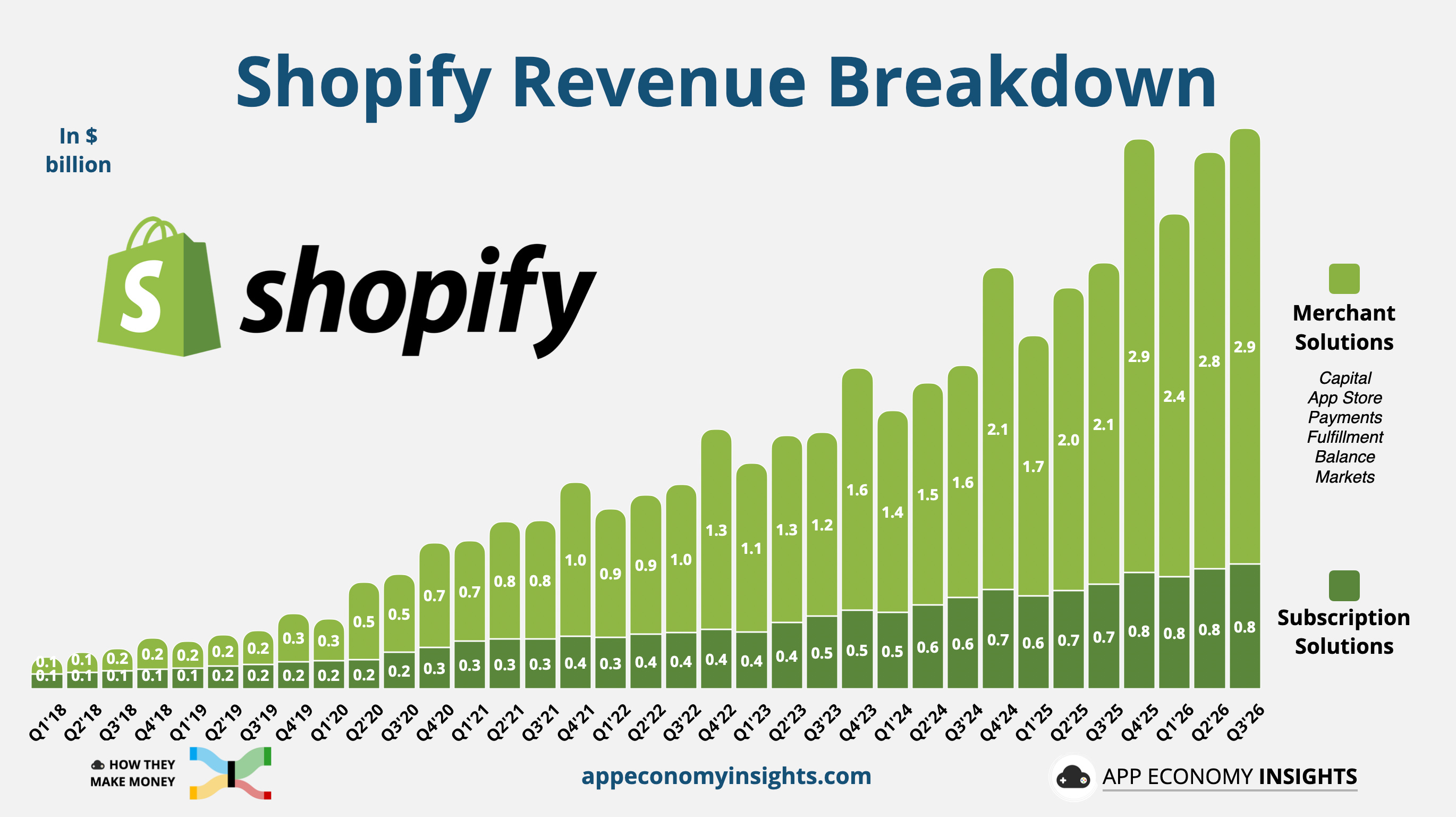
Merchant Solutions revenue grew 35% to $2.91 billion, supported by Shopify Payments penetration exceeding 68% of GMV (+3pp Y/Y). Shop Pay GMV increased 50%.
Subscription Solutions grew 20% to $836 million, missing expectations. Monthly recurring revenue increased 19% to $230 million, reflecting continued merchant additions.
AI-driven traffic grew 2.6x Y/Y, while orders increased 3.3x. Shoppers arriving through AI channels converted 64% more often than through traditional search, while Shopify Catalog-powered searches converted at twice the rate of general AI searches. Management cautioned that AI commerce volumes remain small, but the early conversion advantages are encouraging.
Free cash flow jumped 61% to $816 million, reaching a 22% margin, up from 18% a year ago. However, CFO Jeff Hoffmeister attributed only about 1.5 percentage points of that improvement to structural operating leverage. The rest reflected temporary benefits from lower marketing spending, tax timing, and an accounting change related to merchant cash advances.
Shopify expects Q4 revenue to grow in the low 30s%, implying a seventh consecutive quarter above 30%. Gross profit should grow in the high 20s%, while free cash flow margin is expected to ease to approximately 19%, consistent with Q4 2025.
Shopify continues to deliver exceptional growth and cash generation, with AI opening another potential distribution channel. But GMV growth is moderating, and at roughly 65x forward earnings, even modest disappointments can trigger outsized reactions.
3. 📈 AppLovin: The Model Payoff
AppLovin’s Q3 revenue surged 55% Y/Y to $2.2 billion ($120 million beat), accelerating 14% sequentially. GAAP EPS reached $4.30 ($0.27 beat), while adjusted EBITDA jumped 59% to $1.8 billion, maintaining an extraordinary 84% adjusted margin.
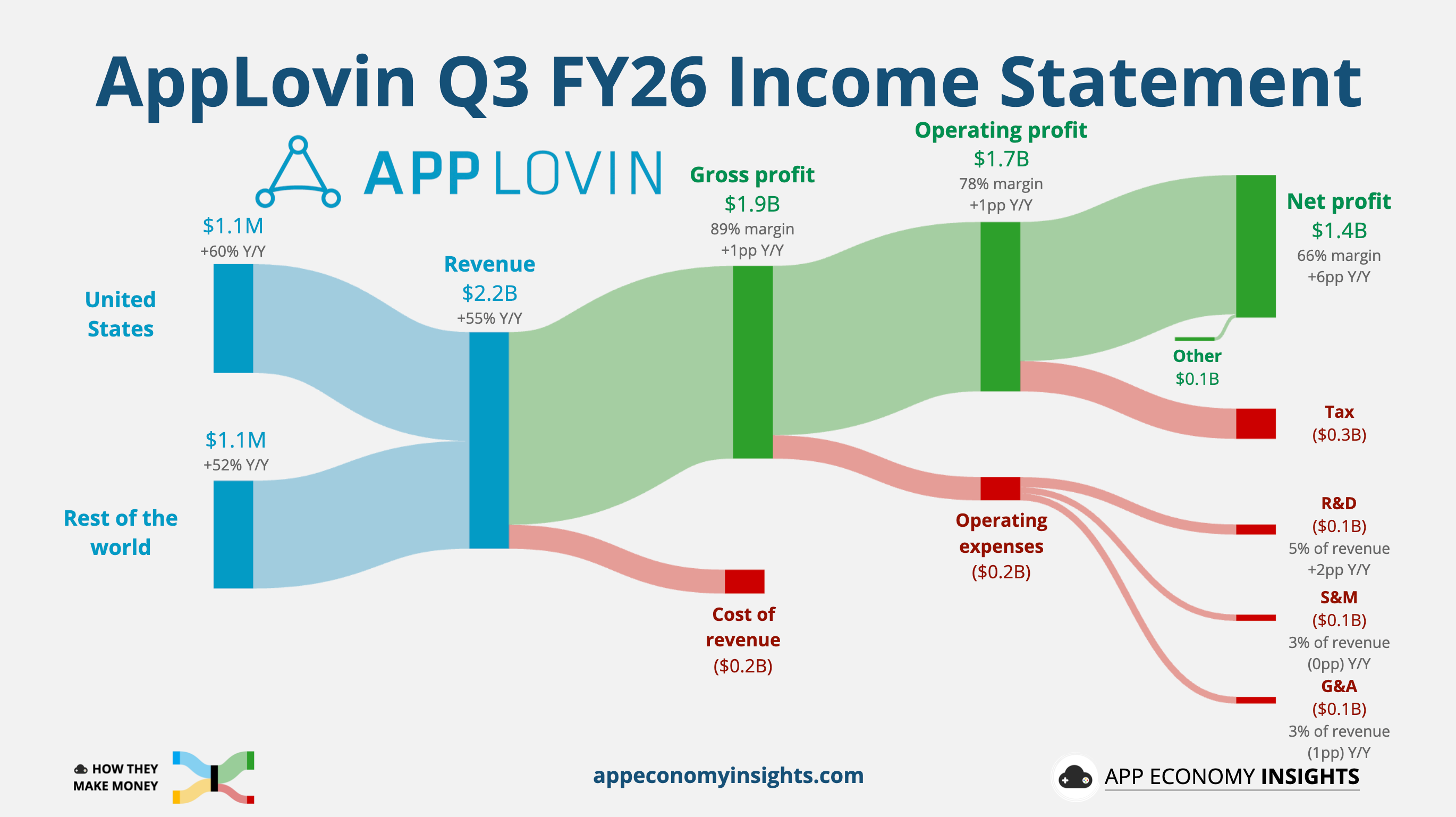
The model timing issue we discussed in Q2 appears resolved. AppLovin partially rolled out its next-generation AI models, improving advertiser returns and unlocking additional spending. Its core gaming business reaccelerated to nearly 50% Y/Y growth, driving most of the revenue beat.
CEO Adam Foroughi described the architectural transition as comparable in technical significance to AXON 2.0. The new models can process more data and perform particularly well with newer and smaller advertisers, where historical conversion data is limited.
But the bigger opportunity may be beyond gaming.