


Welcome to the Premium edition of How They Make Money.
Over 300,000 subscribers turn to us for business and investment insights.
In case you missed it:
💍 Oura is going public
Oura started as a niche sleep tracker and has become one of the breakout consumer health products of the decade.
It still looks like a hardware company. But the S-1 tells a more interesting story.
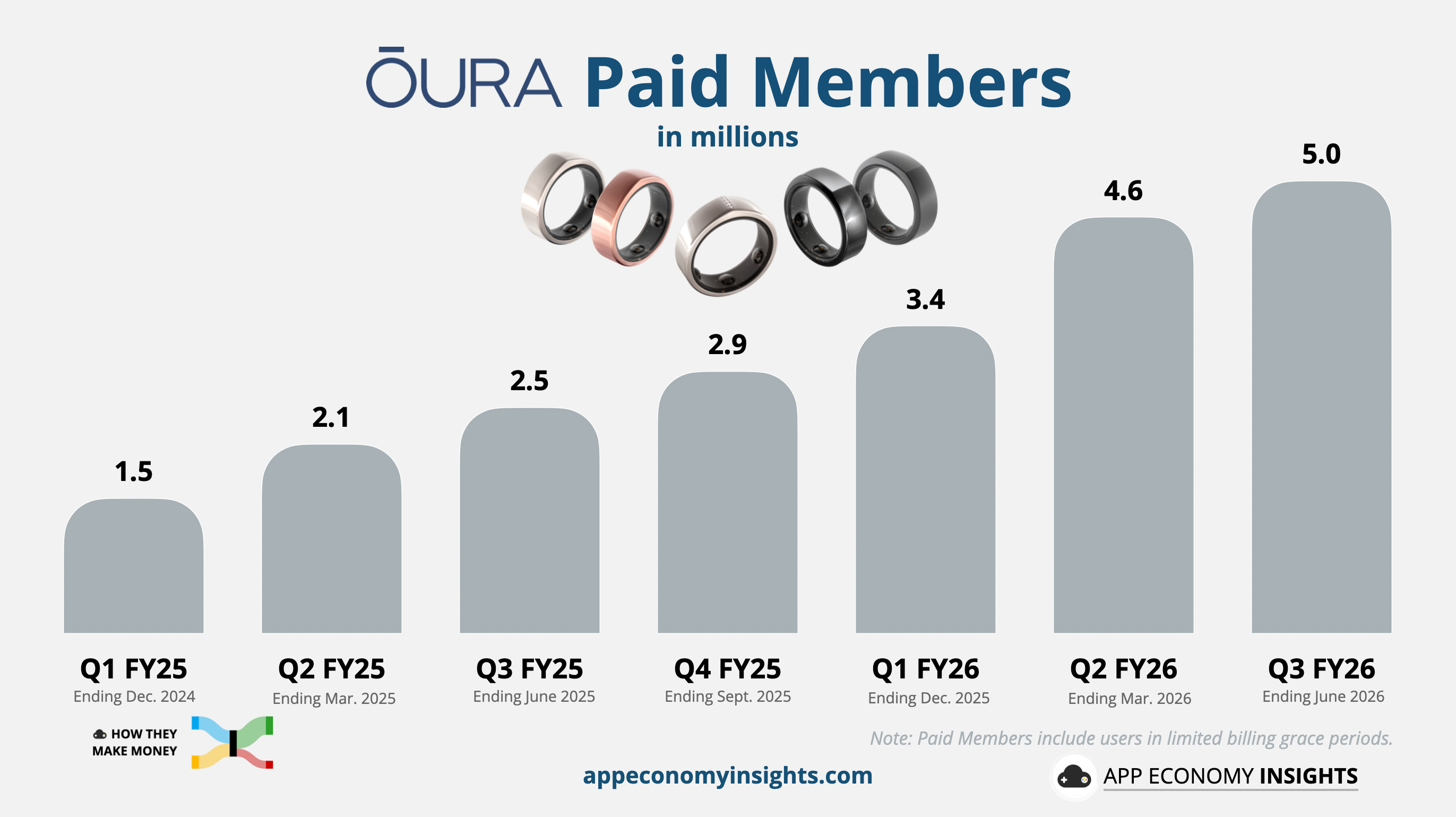
Revenue surged 74% Y/Y to $1.2 billion in the first nine months of FY26, which ends in September. The company is profitable, and 5 million members now pay for the software layer attached to the ring.
The main question is whether Oura remains a hit hardware vendor or successfully scales into an enduring consumer health platform.
I condensed 300+ pages of the S-1 into a clean breakdown, supported by our signature visuals. By the end, you'll have a clear view of the Oura investment case.
Today at a glance:
Overview
Business Model
Financial highlights
Risks & Challenges
Management
Use of Proceeds
Future Outlook
Personal Take

1. Overview
Oura was founded in Finland in 2013 around a simple idea: the finger is a particularly good place to measure the body.
Compared with the wrist, Oura says the finger can provide a much stronger photoplethysmography signal, helping improve measurements such as heart rate and heart rate variability. The ring form factor also encourages continuous wear.
The basics
Headquarters: San Francisco, California
Ticker: OURA (Nasdaq)
Mission: Empower people to live healthier, longer
Latest product: Oura Ring 5, launched June 2026
Oura has evolved from a sleep-and-recovery tracker into a broader health wearable covering more than 50 health and wellness metrics, including activity, stress, heart health, metabolic health, and women’s health.
That expansion has helped turn smart rings from a niche product into a meaningful wearable category.
Still small in wearables
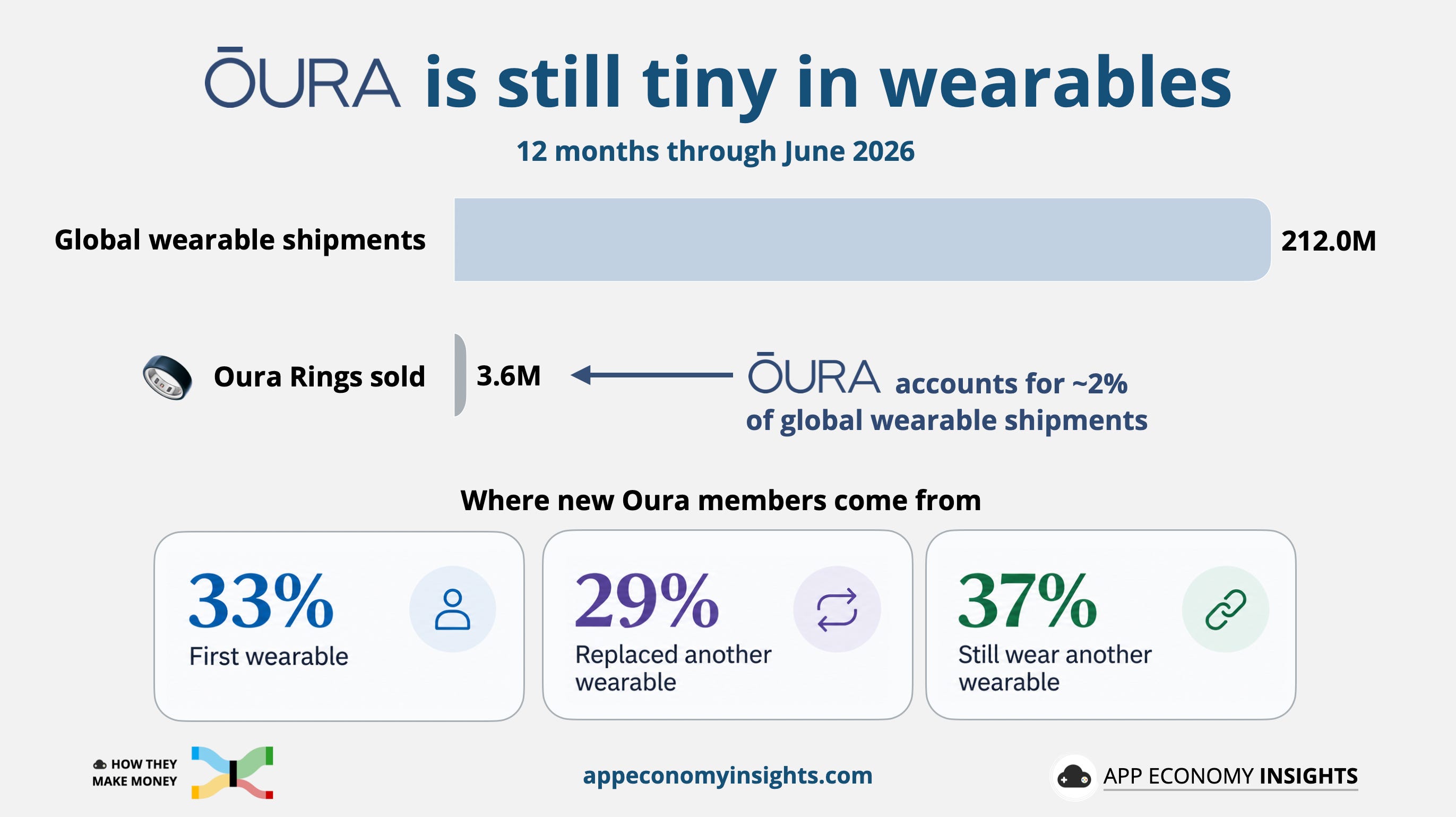
Oura sold 3.6 million rings in the 12 months through June 2026, compared with approximately 212 million wearable devices shipped globally.
That’s only around 2% of global wearable shipments.
Who wears Oura?
I don’t own an Oura Ring myself. I lift weights regularly, and having to take a ring off during strength training undermines some of the appeal of an always-on fitness tracker for me. But living in San Francisco, it sometimes feels like every woman around me does. And the S-1 actually backs that up:
72% are women
73% are 45 or younger
63% report household income above $100,000
More than half report at least one chronic condition
What’s particularly interesting is that Oura isn’t replacing smartwatches.
For many users, the ring is creating a new slot on the body rather than fighting directly for the wrist. Many members either had no previous wearable or continue wearing another alongside it.
Takeaway: Oura has already built meaningful scale, but it still represents only a small fraction of global wearables. Oura’s runway depends less on stealing smartwatch share than on making smart rings a much larger category.
2. Business Model
Oura makes money in two ways: