


Welcome to the Saturday PRO edition of How They Make Money.
Over 300,000 subscribers turn to us for business and investment insights.
In case you missed it:
Premium members get:
📊 Monthly reports: 200+ companies visualized.
📩 Tuesday articles: Exclusive deep dives and insights.
📚 Access to our archive: Hundreds of business breakdowns.
PRO members get everything PLUS:
📩 Saturday PRO reports: Timely insights on the latest earnings.
Today at a glance:
🛒 Walmart: Digital Outruns Stores
⚙️ Analog Devices: Grid-to-Chip Breakout
🎮 NetEase: Evergreen Games Deliver
🎯 Target: Traffic Holds Up
⛷️ Amer Sports: Wilson Joins In
💳 Klarna: GMV Reset

1. 🛒 Walmart: Digital Outruns Stores
Walmart Q2 FY27 revenue rose 6% Y/Y to $187.9 billion ($1.1 billion beat), with adjusted EPS of $0.81 ($0.07 beat). Walmart US comps slowed to 2.6%, the weakest growth in more than six years and below the 3.7% consensus, sending shares sharply lower. Transactions still grew 1.5%.
The headline slowdown is somewhat misleading. New federal drug-pricing rules created a roughly 125 bps drag on US comps. Excluding Health & Wellness, comps grew 3.4%. Walmart also used some of its tariff refunds to cut prices on more than 11,000 items. The company continues gaining share, particularly in grocery and among higher-income households.
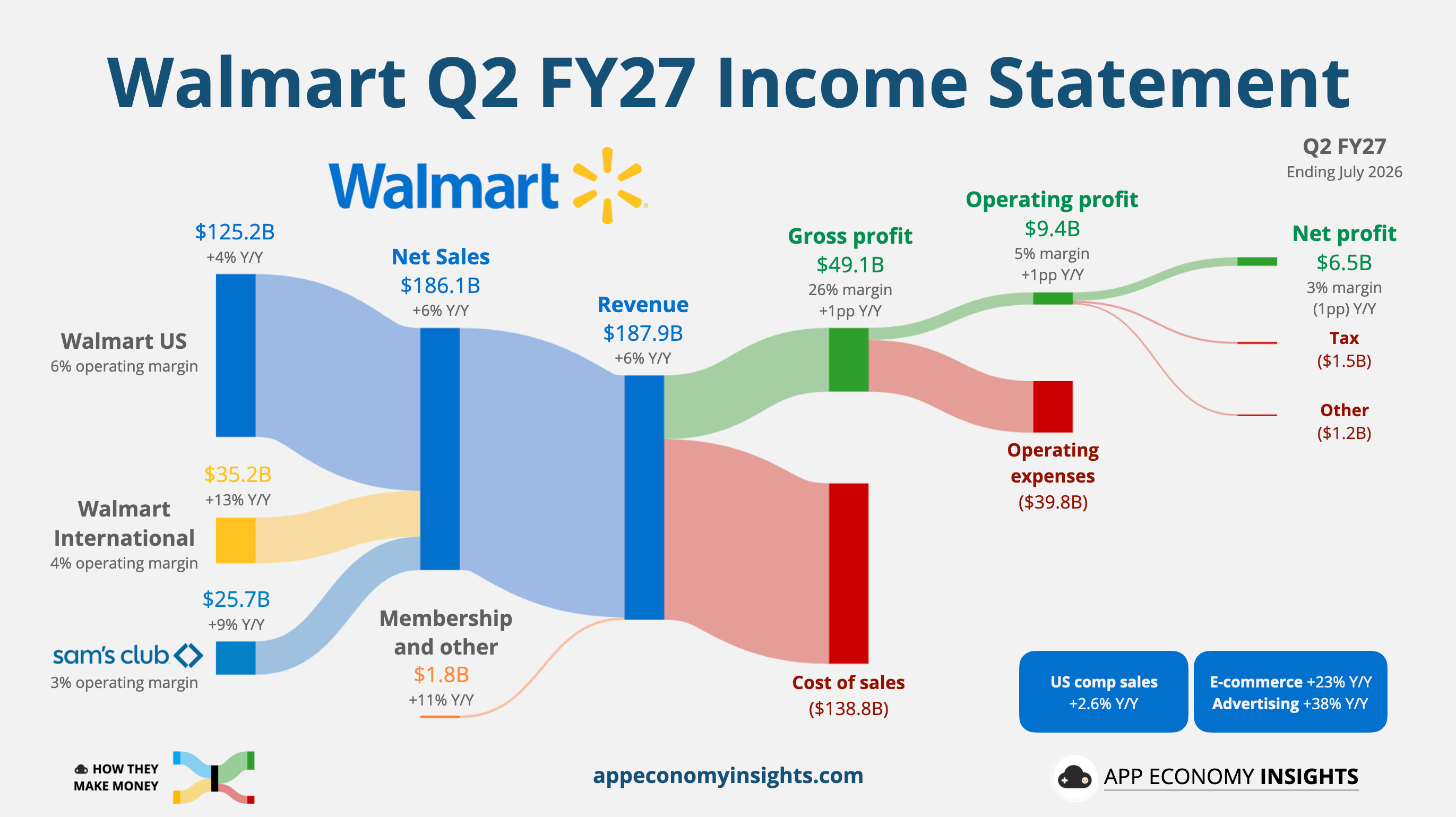
Meanwhile, the businesses increasingly driving Walmart’s economics remain much stronger than store sales:
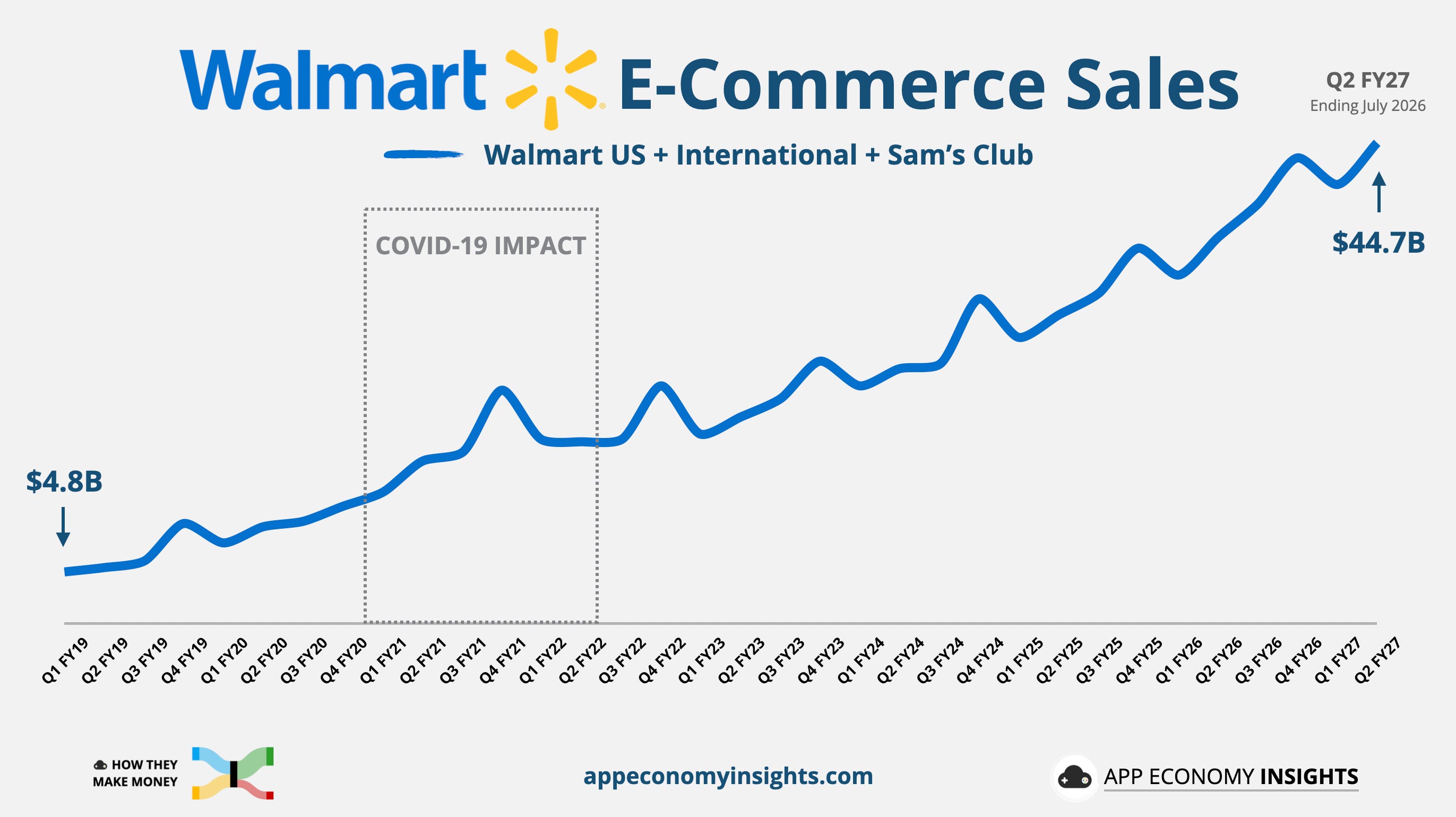
Global e-commerce grew 23%.
Advertising surged 38%.
Membership fee revenue increased 17%.
Walmart US e-commerce has now grown above 20% for 10 consecutive quarters, with profitability improving as stores increasingly function as fulfillment hubs rather than simply physical retail locations.
Fuel remains a challenge, with FY27 incremental fuel costs now expected above $2 billion. Walmart is also expected to continue reinvesting tariff refunds into lower prices, contributing to Q3 adjusted EPS guidance of $0.62–$0.64, which is below consensus.
Despite that reinvestment, Walmart raised FY27 sales growth guidance to 4%–5% (from 3.5%–4.5%) and adjusted operating income growth to 7%–8.5% (from 6%–8%).
Bottom Line: Slower US comp reflects pharmacy pricing rather than lost share. The more important shift continues underneath, with e-commerce, advertising, membership, and marketplace growing far faster than traditional stores. Walmart increasingly looks less like a retailer with digital businesses attached and more like an omnichannel platform funded by retail.